Unearthing the Impossible: Tropical Forests Discovered Beneath Antarctic Ice
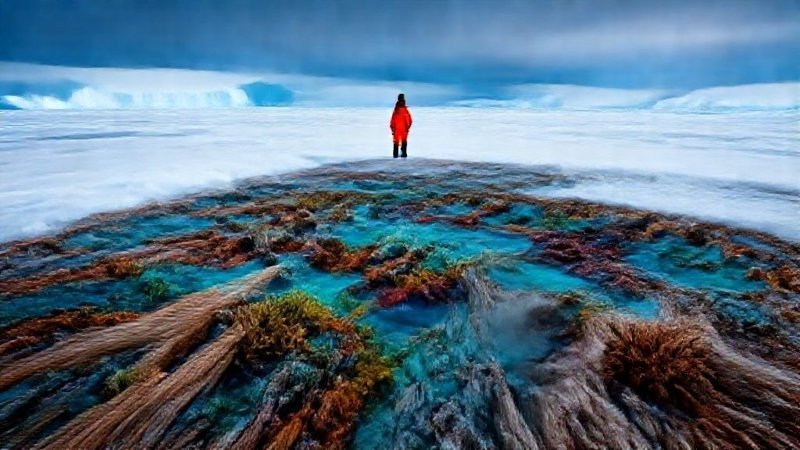
Unearthing the Impossible: Tropical Forests Discovered Beneath Antarctic Ice
This is the true beginning, the point where time stands still and all the certainties we once believed we understood about our planet dissolve. Join me now at the edge of the world, where maps end and eternal silence begins. You are now in Antarctica, the continent that wraps around our South Pole like a shroud of blue ice, a vast expanse one and a half times the size of Europe, yet offering its visitors nothing but deadly cold and winds that howl through frozen mountains like lost souls. Here, where temperatures plummet to below ninety degrees Celsius and ice extends to depths of four thousand meters, it seems impossible for this land to have any story other than white death.
Navigate Content
Antarctica’s Icy Veil: A Land of Frozen Secrets
However, as icebreakers carve paths through this frozen expanse and scientists’ picks delve into layers of frozen time, the outlines of a mystery that upends historical understanding have begun to emerge. Imagine digging into the heart of this frigid landscape, only to suddenly find the remains of an ancient tropical forest. Yes, beneath tons of snow that haven’t melted for millions of years lie petrified trees and massive roots that once anchored themselves in warm, moist soil. How can such a stark paradox exist in one place? How did that green paradise, teeming with vibrant life and giant ferns, transform into this silent, icy tomb? This astonishing discovery raises incessant questions: If this continent once experienced such overwhelming warmth, what prevents history from repeating itself? And what else lies hidden in those deep layers that human hands have yet to touch? For more on the continent’s enigmas, explore the Military Secrets of Antarctica.
The Golden Key: Messages from a Lost Green Paradise
These are not merely fossils; they are coded messages sent from an ancient era, a time when the White Continent pulsed with warmth and was adorned with the colors of tropical life. This contradiction presents us with a pivotal question that shakes the foundations of our climatic understanding: What happened to cause the planet’s balance to shift so dramatically? Was Earth concealing a secret we weren’t prepared to hear? These lost forests are not just a memory; they are the golden key that will unlock the doors to understanding Earth’s climate history, and perhaps… our own future. As you contemplate these petrified trunks that defy logic, you will feel a chill permeate your depths—not just the cold of the ice, but the chilling awe of cosmic transformations. We are not talking about a minor change here, but a radical upheaval that turned a tropical forest into an icy desert. We now stand before the gateway, and the ice has begun to speak a language understood only by those who dare to venture into the unknown.
Beyond the Ice: Unveiling Earth’s Ancient Archive
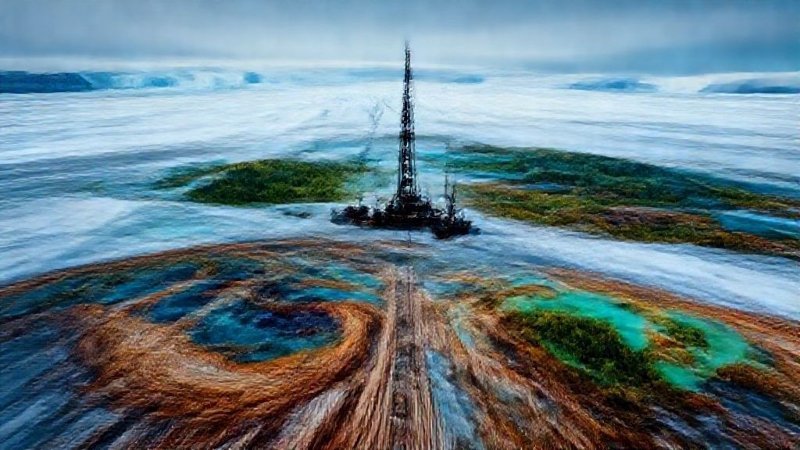
What these excavators found in the heart of Antarctica was not merely ephemeral plant remains; it was akin to a “black box” of a planetary catastrophe or a climatic transformation never witnessed by humanity. To grasp the extent of the scientists’ astonishment, imagine yourself standing amidst an absolute white expanse, where winds howl like wandering spirits and temperatures drop to below sixty degrees Celsius, a place where the boundaries between earth and sky vanish. In this frozen void, major excavation missions were launched, carrying heavy equipment not to extract gold or oil, but to interrogate the ice and extract the testimony of “time” itself. The process begins with what scientists call “Ice Coring.” Imagine colossal drilling machines, with diamond-tipped heads, gnawing at the frozen body of the continent to penetrate depths of thousands of meters. When these machines pull out long cylinders of ice, they are not just retrieving frozen water, but a chronological “archive” untouched by sunlight for millions of years. Every layer of this ice is a page in Earth’s history book; microscopic air bubbles are trapped within, which are in fact pristine samples of the ancient atmosphere. When scientists analyze these bubbles, they are literally inhaling the air that dinosaurs breathed and measuring carbon dioxide levels from epochs before human existence. For more on deep drilling ventures, read about the Kola Superdeep Borehole.
Echoes of the Tropics: Petrified Evidence and Ancient Pollen
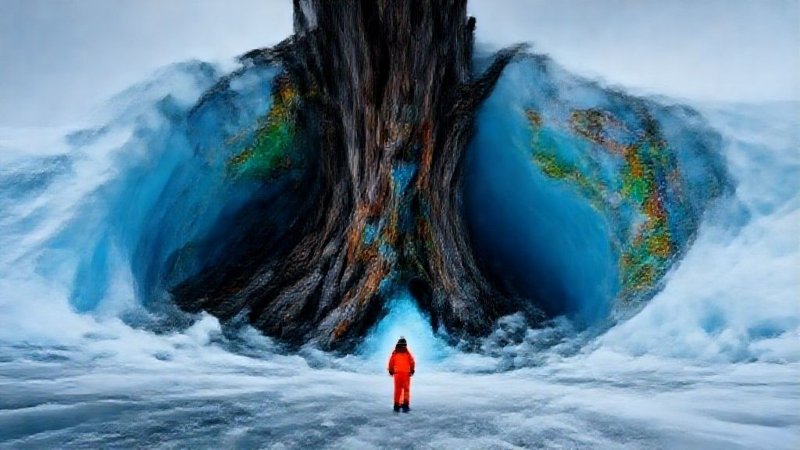
But the true surprise was not only in the air but in what settled at the bottom of these ice records and underlying sedimentary layers. At hundreds of meters deep, as the drill penetrated sedimentary rock layers predating the Ice Age, organic remains began to appear that definitively did not belong in this cold environment. Excavators retrieved pieces of petrified wood that preserved the finest details of their bark, and tree leaves that looked as if they had fallen yesterday from a lush forest. Even more astonishing was the discovery of microscopic grains of “pollen” from tropical and subtropical plants. How could these delicate organisms exist in one of Earth’s most hostile environments? This is where paleoclimatology comes in, seeking to decipher this stark contradiction. These layers act as a geological time machine; every millimeter of sediment holds a story about ancient ocean temperatures and wind currents that prevailed thirty-four million years ago. The challenge was not just scientific, but a bitter logistical struggle; equipment would freeze and break, fuel would become viscous like tar, and scientists faced isolation and utter darkness during the long polar winter, all for a piece of petrified wood or a handful of organic dust. Discover more about ancient biological findings in Ancient Plagues Unlocked.
The Great Transformation: From Lush Forest to Icy Tomb
However, this arduous journey through the glacial time records revealed a terrifying truth to scientists: the transition from a dense green forest to an icy desert was a radical upheaval that profoundly reshaped the continent. This shift was a catastrophic event on a planetary scale, forever changing the face of Antarctica and offering a stark warning about the planet’s dramatic capacity for change. The secrets locked within these frozen depths continue to challenge our understanding of Earth’s past and hint at the potential for future transformations.

Frequently Asked Questions
Generated by AI Content Architect
About The Author