
Egypt’s Eternal Enigma: From Pyramid Builders to Vision 2026 | Unraveling Immortality

0
image_1-200


Egypt’s Eternal Enigma: From Pyramid Builders to Vision 2026 | Unraveling Immortality

Here, where the very edge of time recoils, humbled and diminished, the story begins. Imagine standing on the bank of a river that was not merely a waterway, but the artery of existence, pumping life into the veins of nothingness. Do you feel the coolness of the silt beneath your feet? Can you hear the rustle of papyrus as it whispers the secrets of kings who became gods, and gods who dwelt in mud-brick homes? You are not reading history; you are inhaling the stardust that gathered upon this land to forge what we call “Egypt.”


The Enduring Riddle of the Blessed Land

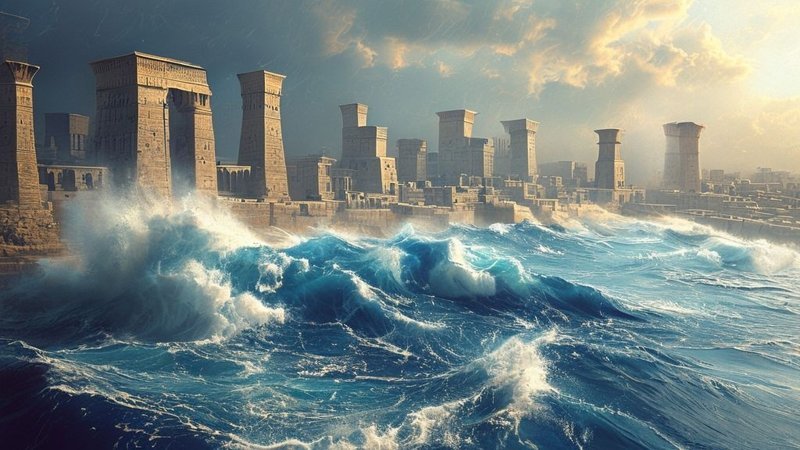
This is the prelude, the inaugural pulse in the heart of “the Blessed Land” – that unique place fate decreed to be the navel of the world and the crucible of creation. From the moment the first human gaze turned towards the sunrise over the Giza plateau, up to the enigmatic moment we anticipate in 2026, Egypt has been the sole constant in the equation of cosmic variables. But have you ever asked yourself: Why Egypt? Why has it not vanished like Babylon, or withered away like Assyria? What is the secret embedded in the very essence of this land that allows it to rise from its ashes every time invaders believe it has been extinguished?

Our journey today is not merely a narration of bygone events, but a voyage through “Extended Time.” We will embark from the zero point, when the land was a “wilderness” that the Nile wove into the fabric of civilization. We will traverse the labyrinths of ancient secrets, tracing the footsteps of “Menes” as he spun the threads of unity, and witnessing the breaking of invading waves against the rocks of its will. We will pass through the flash of swords in the Middle Ages, and the smoke of factories in modern Egypt’s renaissance, culminating in the grand vision now being shaped, where ancient stone intertwines with tomorrow’s technology on the horizon of 2026.
The Enduring Riddle of the Blessed Land


From Unification to the Golden Age of Pyramids

This is an astonishing temporal map, commencing with the first cry of birth, passing through the pinnacle of Pharaonic glory, then the crossroads of Greek and Roman civilizations, leading to the conquest that transformed its spiritual landscape, and the rise of kingdoms and empires that made Cairo a Mecca for science and art. However, a question hangs like a sword over the heads of historians: Was the power in the stone or in the people? And how did this relatively small geographical area manage to captivate the imagination of the planet for thousands of years?

This convergence was not born of chance, but was a destiny inscribed by the ink of the Nile upon the sands of time; for before the first brick was laid in the edifice of civilization, the land was a fragmented cry between north and south, a valley seething with conflicts under a relentless sun. Have you ever wondered, while gazing at the “Narmer Palette”, if the unification of the Two Lands was merely a military victory, or a magical rite to tame chaos? In that moment, when Narmer placed the two crowns upon a single head, he was not merely merging geographies, but announcing the birth of “Egypt” as a living entity, a god walking upon the earth. From that point, the gateway to eternity opened.

Imagine yourself now traversing the mists of years to the era of the “Pyramid Builders.” The silence here carries a profound resonance. Behold “Imhotep”, that genius who was not content merely to gaze at the stars, but aspired to build a stairway to them. Do you feel the tremor of the stone beneath the workers’ fingers as they raised the “Step Pyramid of Djoser”? This is the Old Kingdom, where belief in immortality was transformed into engineering that defied oblivion. But pause for a moment… Were Khufu, Khafre, and Menkaure merely building tombs? Or is the Giza plateau a cosmic cipher left for us to decipher when we are ready? The answer lies not in the stone, but in the spirit that compelled an entire nation to work as one heart in service of an idea transcending death.


The Evolution of Immortality: Middle & New Kingdoms

However, just as the Nile overflows and then recedes, the Old Kingdom fell into the darkness of chaos, only for the sun of the “Middle Kingdom” to rise anew. Here, greatness was no longer measured by the sheer scale of stone alone, but by the sophistication of language and the depth of emotion. It was the era of “Literary Flourishing,” where the scribe became paramount over the warrior. Can you hear the echo of the Eloquent Peasant’s complaints reverberating through the halls of justice? In this era, the Egyptian realized that immortality resided not solely in the pyramid, but in the justice the king established among his subjects. Nevertheless, a danger loomed on the horizon: invaders from the East (the Hyksos) who would change the face of history forever. Was that defeat a curse, or was it the shock that awakened the Egyptian giant, transforming it from a peaceful state into an invincible empire?

Here we reach the zenith, the “New Kingdom,” where the roar of war chariots filled the corners of the earth. Behold “Hatshepsut,” that woman who reigned as king, and caused incense to flow from the Land of Punt like rivers. Then contemplate “Thutmose III,” the Napoleon of the East, who extended…
The Evolution of Immortality: Middle & New Kingdoms


Egypt’s Unending Story: The Code of Immortality and Future Horizons

As I speak to you now, remember that every passing second is a brick in the wall of this magnificent edifice. We do not gaze upon the past to lament its ruins, but to comprehend the code that will unlock the doors of the near future for us. So, what awaits “the Blessed Land” in 2026? And what are the major milestones that shaped the Egyptian spirit, enabling it to smile in the face of oblivion? The story of Egypt’s immortality is complex, rooted in several factors:

  • The Nile: The lifeblood that fostered civilization and unity.
  • Spiritual Depth: A profound belief system that integrated gods, kings, and the afterlife.
  • Architectural Grandeur: Structures like the pyramids that physically defied time.
  • Cultural Resilience: The ability to absorb invaders and emerge stronger, reinventing itself.
  • Quest for Justice: As seen in the Middle Kingdom, recognizing societal fairness as a form of enduring legacy.

Prepare yourself, for the story has not yet truly begun, and what you see now is merely the light preceding an explosion of knowledge. There is a mystery awaiting you beyond the next turn of this narrative, a mystery concerning the true reason why the entire world views Egypt not as a mere country on a map, but as a state of immortality. Are you ready to confront the truth hidden behind golden masks and temple walls? The answer begins here… from the point where eternity meets hope.


Frequently Asked Questions

Why has Egypt persisted through millennia when other great civilizations vanished?
The text suggests this is due to a “secret embedded in the very essence of this land,” enabling it to “rise from its ashes every time invaders believe it has been extinguished.” It’s linked to Egypt’s unique identity as “the navel of the world and the crucible of creation.”
What was the significance of Narmer’s unification of the Two Lands?
Narmer’s act of placing the two crowns upon a single head was “not merely merging geographies, but announcing the birth of ‘Egypt’ as a living entity, a god walking upon the earth,” thereby opening “the gateway to eternity.”
What was the true purpose behind the construction of the Great Pyramids in the Old Kingdom?
While seemingly built as tombs, the text suggests a deeper meaning: “belief in immortality was transformed into engineering that defied oblivion.” It posits the Giza plateau as a “cosmic cipher” and attributes the construction to “the spirit that compelled an entire nation to work as one heart in service of an idea transcending death.”
How did the Middle Kingdom redefine the concept of immortality for the Egyptians?
In the Middle Kingdom, the understanding of immortality evolved beyond physical structures. The text states, “the Egyptian realized that immortality resided not solely in the pyramid, but in the justice the king established among his subjects,” highlighting an era of “Literary Flourishing.”
What is the significance of “Vision 2026” in the context of Egypt’s long history?
“Vision 2026” is presented as the culmination of Egypt’s journey through “Extended Time,” a grand vision “now being shaped, where ancient stone intertwines with tomorrow’s technology on the horizon.” It represents the ongoing evolution of the Egyptian spirit into the near future.

Generated by AI Content Architect

About The Author

Leave a Reply

Your email address will not be published. Required fields are marked *