
Derinkuyu: Unearthing Turkey’s Lost Underground City of Giants

0
image_1-156


Derinkuyu: Unearthing Turkey’s Lost Underground City of Giants
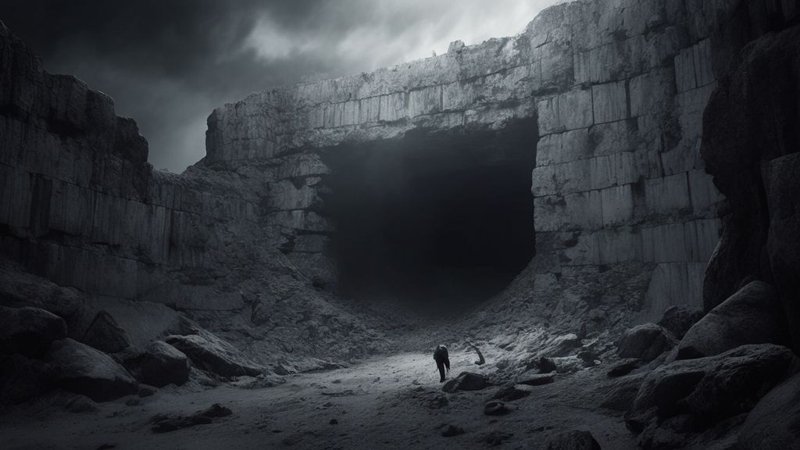
Imagine knocking on a wall in your humble home, only for the stone to collapse, revealing a dark chasm that leads you to a world untouched by human feet for centuries. You now stand not merely before an ancient cellar, but at the threshold of an entire city, inhabited by twenty thousand people who fled death and destruction on the Earth’s surface. We are speaking of Turkey’s Derinkuyu, an engineering marvel carved by ancient peoples into the heart of volcanic rock, to become the largest safe haven known in ancient human history.


The Accidental Unearthing of a Sunken World
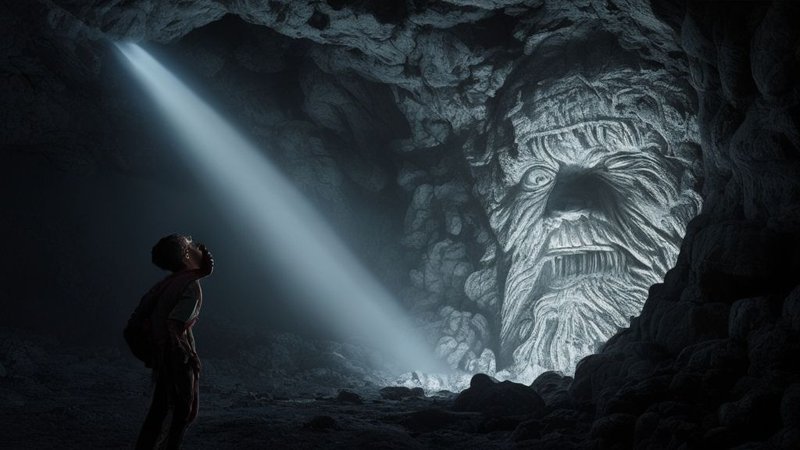
In 1963, an ordinary Turkish man was renovating his home in Cappadocia when he discovered a secret room behind his basement wall, which led him to a tunnel and then to an endless labyrinth. Little did he know that he had opened a time portal leading to a city sunken deep into the earth, extending eighteen stories below the surface and reaching a depth of over eighty-five meters. As you descend these narrow passages, you feel the coolness of the rock against your skin and hear the echo of your breath rebounding from walls that witnessed the struggles and wars of nations and empires long vanished, yet remain a testament to the will to survive. This discovery echoes the hidden depths explored in Beneath Our Feet: Hidden Oceans, Ancient Civilizations & Earth’s Unsolved Mysteries.

The Accidental Unearthing of a Sunken World


Carved from Volcanic Heart: The Rock That Built a City

The ground you now walk on in Cappadocia is not ordinary; it is the product of ancient volcanic eruptions that covered the region with layers of ash, which over time transformed into a soft volcanic rock called tuff. This rock possesses astonishing properties: it is easy to carve when soft but hardens upon exposure to air, which enabled the ancestors to excavate their city without the need for wooden or iron supports. You observe stone columns that are an integral part of the parent rock, not added but carefully left in place to support the weight of the mountains above them.


Fortresses Beneath the Surface: Ingenious Defenses

But why did these people choose to live in complete darkness, away from sunlight and fresh air? The answer lies in fear and the primal instinct for survival. This region was a passageway for invading armies of Persians, Arabs, Byzantines, and Mongols. When your eye caught sight of dust rising from the desert horizon, announcing the arrival of a merciless army, you would find no place to hide but deep within the earth. People would gather their children, livestock, and provisions and withdraw in solemn silence into these stone cavities, closing behind them doors that could never be opened from the outside.

You now stand before one of these doors, a massive stone disk resembling a millstone, weighing approximately five hundred kilograms. This door is designed with deadly defensive ingenuity, as it can only be opened or moved from the inside, via a dedicated cavity for a wooden lever. In the center of this disk is a small opening, not merely for observation, but also used for firing arrows or pouring boiling oil onto any intruder attempting to breach the sanctuary. It is a defensive engineering marvel that renders each floor of this city an independent fortress; if the first floor fell, inhabitants would retreat to the second and close the stone door, allowing resistance to continue.
Fortresses Beneath the Surface: Ingenious Defenses


Sustaining Life in the Depths: Engineering Marvels

You might wonder how twenty thousand people could breathe in such a profound depth without suffocating from lack of oxygen or the smoke of oil lamps. Here, the true engineering marvel lies in the ventilation system’s design. These ancient engineers excavated over five hundred vertical shafts connecting the surface to the city’s deepest points. These shafts not only brought in air but also functioned as water wells, terminating at their bases in cisterns that collected pure groundwater. The brilliance of the design lay in the fact that not all these wells opened to the surface, to prevent enemies from poisoning the water; some were entirely secret, their locations known only to the inhabitants of the depths. This level of sophisticated planning rivals the concepts explored in Lost Technology: Ancient Wonders, Vanished Knowledge & Shocking Historical Mysteries.

As you wander through the upper levels, you will find stables for horses and livestock. Animals were placed on floors closer to the surface for two logical reasons:

  • Ease of entry and exit: Facilitating movement of larger animals.
  • Thermal regulation: Utilizing their body heat to warm the lower levels and keeping the smell of manure away from the deeper living quarters.

The deeper you descend, the more you uncover the details of a complete social life. There are massive communal kitchens where traces of black smoke still stain the rock ceiling, along with presses for oil and wine, and grain storage rooms sufficient to feed the inhabitants for many months without needing to emerge to the surface.


A Vibrant City in the Shadows: Education, Faith, and Survival

Derinkuyu was not merely a temporary hiding place but a vibrant city comprising religious schools, churches, and meeting halls. On the second floor, you will find a spacious school with a meticulously carved barrel-vaulted ceiling, including study rooms, indicating that these people did not neglect their children’s education even in times of crisis. In the deeper levels, you will discover churches carved in the shape of a cross, offering spiritual hope and psychological tranquility to the inhabitants amidst the confined space. You sense the narrowness of the passages, deliberately designed to be low and confined, forcing an invading enemy to stoop and walk in single file, thus making them an easy target for defenders.

Imagine the psychological state of these people, living for weeks in darkness broken only by the glow of small oil lamps. They would hear the hoofbeats of their enemies’ horses passing directly above them, while they remained in absolute silence, holding their breath so that no one would discover their location. Their lives hung by a delicate thread of silence and cooperation. The social system was strict, and precision in resource distribution was a matter of life or death. Every corner of Derinkuyu tells a story of sacrifice and human ingenuity, which manifests in its most brilliant forms when humanity confronts its inevitable demise. The city’s sewage system is also astonishing; deep cavities were allocated for waste disposal, far from water and ventilation sources, preventing the outbreak of epidem
A Vibrant City in the Shadows: Education, Faith, and Survival


Frequently Asked Questions

How was the ancient city of Derinkuyu discovered?
In 1963, an ordinary Turkish man renovating his home in Cappadocia discovered a secret room behind his basement wall, which led to a tunnel and then to the vast underground city of Derinkuyu.
How deep is Derinkuyu, and how many people could it accommodate?
Derinkuyu extends eighteen stories below the surface, reaching a depth of over eighty-five meters, and was capable of housing approximately twenty thousand people along with their livestock and provisions.
What made the construction of Derinkuyu possible without external supports?
The city was carved into a unique volcanic rock called tuff, found in Cappadocia. This rock is easy to carve when soft but hardens upon exposure to air, allowing the ancient peoples to excavate the city with integrated stone columns that supported the mountains above.
How did Derinkuyu’s inhabitants breathe and access water underground?
Ancient engineers designed an ingenious ventilation system with over five hundred vertical shafts connecting the surface to the city’s deepest points. These shafts also served as water wells, terminating in cisterns that collected pure groundwater, some of which were secretly located to prevent poisoning by enemies.
What were the primary defensive features of Derinkuyu?
Derinkuyu featured massive stone disk doors, weighing around five hundred kilograms, which could only be opened from the inside using a wooden lever. These doors also had small openings for observation, firing arrows, or pouring boiling oil. Narrow, confined passages forced invaders to stoop and walk in single file, making them easy targets for defenders.

Generated by AI Content Architect

About The Author

Leave a Reply

Your email address will not be published. Required fields are marked *