The Secret Consciousness of Plants: Do They Observe, Remember, and Control Humanity?

The Secret Consciousness of Plants: Do They Observe, Remember, and Control Humanity?
Navigate Content
-
Ancient Wisdom: Plants as Gateways to Other Realities
-
The Whispers of the Rainforest: Indigenous Knowledge & Unexplained Plant Communication
-
Beyond Stillness: The Scientific Revelation of Plant Intelligence
-
Humanity’s Unseen Masters: Are We Domesticated by Plants?
-
The Enduring Mystery of Our Green Guardians
-
FAQ
Ancient Wisdom: Plants as Gateways to Other Realities
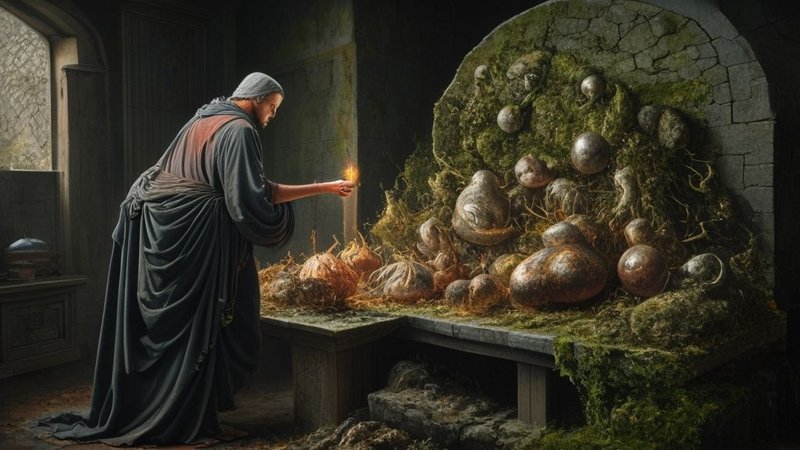
You inhabit a world where humanity presumes dominion over nature, but upon deeper scrutiny, you find that plants are the architects of our environment and the regulators of our very breath. In antiquity, a plant was not just a chemical compound, but a living entity imbued with spirit and extraordinary power. Consider the legend of the Mandrake, or the mandragora plant. With roots resembling the human form, this plant was associated with terrifying tales in the Middle Ages. It was said to shriek upon being uprooted—a fatal cry that would extinguish the life of any who heard it. Observe the terror in the eyes of those who sought it during that era; they would tether dogs to pull it out while stuffing their ears with wax. Behind this folklore lies a biological and psychological truth. This plant contains potent alkaloids capable of inducing visual and auditory hallucinations, leading one to perceive parallel realities. Were these myths mere superstitions, or a cautionary mechanism against a chemical energy capable of manipulating human perception?
Shift your focus now to the civilizations of the East, where the Soma plant emerges in the ancient Indian Vedas. It is described as the drink of the gods, the very plant that grants immortality and profound insight. Scientists to this day have been unable to definitively identify this plant, but they agree it induced states of spiritual ecstasy that founded major religions and philosophies. Here we confront a fundamental question: Can a molecular composition within a plant serve as the bridge across which humanity crossed toward metaphysical concepts? The ancients were not seeking mere pleasure; they were seeking connection. For them, plants were the primary instructors opening the closed doors of perception.
In ancient Egypt, the blue lotus flower would unfurl with the sunrise and close at dusk. The Egyptians saw it as a symbol of rebirth and renewal. But the secret lay not only in its beauty. They utilized it in rituals to expand consciousness. Imagine the Egyptian priest inhaling its fragrant aroma, feeling his body grow heavy while his spirit lightened. This intimate relationship between humanity and flora reveals an inherent human need to seek “supernatural powers” in nature. We are not discussing magic in the traditional sense, but rather biochemistry interacting with your brain cells to reshape your understanding of time and space. For more on ancient mysteries, explore Lost Technology: Ancient Wonders, Vanished Knowledge & Shocking Historical Mysteries.
The Whispers of the Rainforest: Indigenous Knowledge & Unexplained Plant Communication
Let us delve into the depths of the rainforests, home to the Ayahuasca vine, referred to by Amazonian peoples as the “vine of the souls.” Shamans assert that the plant itself teaches them medicine and instructs them on curing ailments. Reflect deeply on this: How did these indigenous populations know that combining two specific plants out of eighty thousand species would yield this unique chemical effect? Modern science stands in awe of this innate knowledge. Do plants possess a means of communicating with us? Do they emit frequencies or signals we only perceive when we enter a specific altered state? The mysteries of the Amazon continue to unfold, much like Amazon’s Walking Trees: The Socratea Exorrhiza Mystery That Will Shock You.
Beyond Stillness: The Scientific Revelation of Plant Intelligence
Modern science is beginning to uncover what the ancients knew intuitively. We are now speaking of the science of “plant neurobiology.” Plants do not possess brains like ours, but they have complex underground communication networks known as the “Wood Wide Web.” Through fungi, trees exchange information, warnings, and even nutrients. If one tree is attacked by an insect, it sends chemical signals to its neighbors, prompting them to start secreting defensive toxins. This action requires situational assessment and decision-making. Is this not a form of superior intelligence? We perceive stillness in the forest, while in reality, a torrent of information flows beneath our feet. This hidden world beneath us holds many Earth’s Unsolved Mysteries.
You look at a tree and see wood and leaves, but the truth is, it is an advanced chemical reactor. Some plants have the capacity for mimicry, altering the shape of their leaves to resemble stones or menacing insects. The Mimosa pudica plant retains memories of experiences and learns from them. In one experiment, this plant was repeatedly dropped without harm; it learned that this falling posed no threat and ceased folding its leaves defensively. This memory persisted for forty days. Can you comprehend that? A plant without a centralized nervous system possesses a longer memory span than some other living organisms. This complex communication and memory echo topics discussed in AI Secret Language: Deciphering Robot Communication Beyond Human Understanding.
Humanity’s Unseen Masters: Are We Domesticated by Plants?
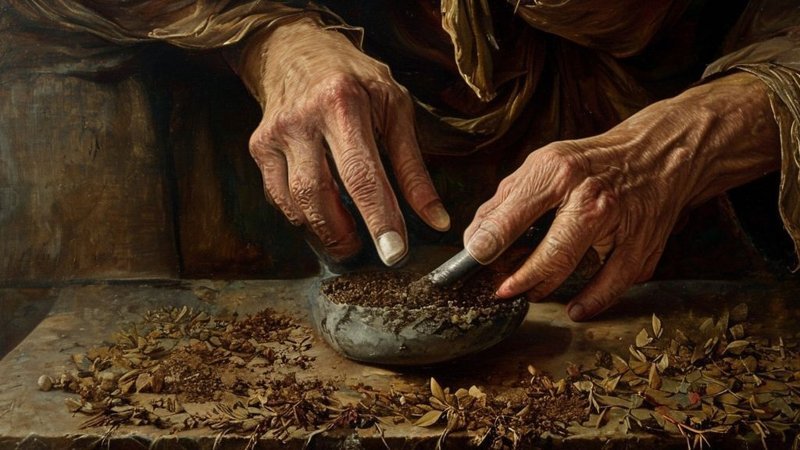
Here we reach the most compelling and astonishing point. Are we the controllers of plants, or are they the ones domesticating us? Consider coffee, tea, tobacco, and cacao. These plants have compelled humans to cross thousands of miles, wage wars, and alter the Earth’s geography solely to cultivate and secure their access. These plants have enslaved humanity to serve as their protectors and agents of propagation in exchange for doses of dopamine or caffeine. The plants we consider fragile have managed to compel the most powerful being on Earth to work in their service. Is this not a form of cunning, superior power?
In Norse mythology, there is Yggdrasil, the World Tree that binds the nine realms. Its roots descend into the underworld, and its branches reach into the heavens. This symbolism reflects a profound understanding that the plant is the link between matter and spirit. When you touch the trunk of an ancient thousand-year-old tree, you are not merely touching vegetation; you are touching living history that has withstood storms, fires, and climatic shifts that annihilated entire human civilizations. This capacity for persistence is the true superpower.
The Enduring Mystery of Our Green Guardians
You must ask yourself: Why do we feel tranquil in a forest, and why are we drawn to plant-based remedies? Perhaps the answers lie not just in biochemistry, but in a deeper, unacknowledged connection to a vast, green intelligence that has silently observed and shaped our world since time immemorial. The superpowers of plants may not be about overt dominion, but about an intricate, enduring presence that continues to challenge our understanding of consciousness, life, and our place within the grand tapestry of existence.

Frequently Asked Questions
About The Author