The Ghost Runner: Unmasking Miracinonyx, North America’s Fastest Extinct Animal
The Ghost Runner: Unmasking Miracinonyx, North America’s Fastest Extinct Animal
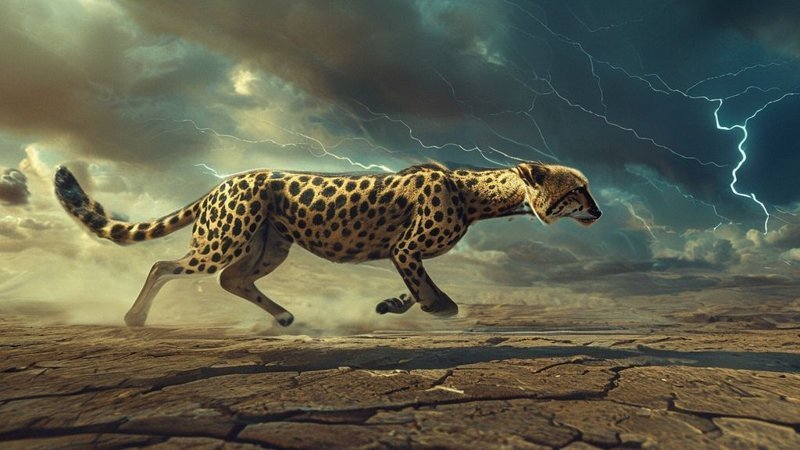
Twelve millennia ago, North America hosted a creature of sublime speed, the apex of evolutionary sprinting, now utterly gone. The speed that haunts the modern Pronghorn antelope—running nearly 30 km/h faster than its current predators—is a genetic scar left by the magnificent, extinct North American Cheetah, *Miracinonyx*. This is the story of why absolute speed was not enough to guarantee survival when the world changed around it.
Navigate Content
The Echo of Extreme Velocity: Why Do Pronghorns Still Run So Fast?
The modern Pronghorn antelope is a biological paradox: capable of speeds up to 98 km/h, far exceeding the needs imposed by modern hunters like wolves (maxing around 65 km/h). This excess capability is not vestigial randomness; it is an evolutionary inheritance. It serves as constant proof that for millennia, the selective pressure demanded this speed. This pressure came from a predator perfectly engineered for the chase: the ghost of the past, *Miracinonyx*.
An Evolutionary Masterpiece: Anatomy of the American Cheetah
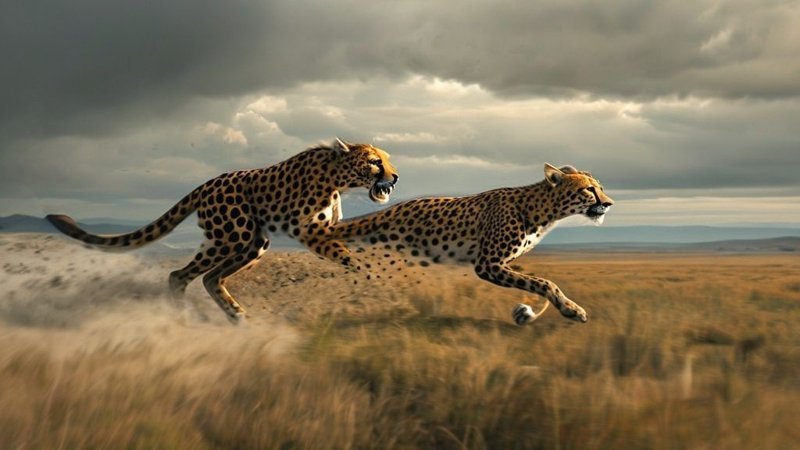
The *Miracinonyx* was an engineering marvel. Imagine a sprinter designed by nature itself:
- Slender Legs and Claws: It featured long, thin legs ending in claws that did not fully retract, offering superior traction during high-speed maneuvers, much like modern track spikes.
- Flexible Spine: Its spine provided an incredible spring action, maximizing stride length across the open plains.
- Cardiopulmonary Power: Its heart and lungs were hyper-efficient, allowing it to ingest and utilize colossal volumes of oxygen required for sustained velocity.
This creature was built to defy friction and gravity in pursuit of its prey.
The Great Environmental Collapse and the Speed Trap
The downfall of this ultimate sprinter was tied directly to the end of the Ice Age. The shifting climate initiated a catastrophe for specialized fauna: The Habitat Shrinkage: Vast, open grasslands gave way to dense forests, suffocating *Miracinonyx*’s primary weapon—absolute speed. The Megafauna Decline: Its primary food sources began to vanish due to climate change. Finally, the arrival of early human hunters, employing novel, coordinated strategies, added lethal pressure where the cheetah had no previous defense mechanism.
Convergent Evolution: The Lesson of Lost Supremacy
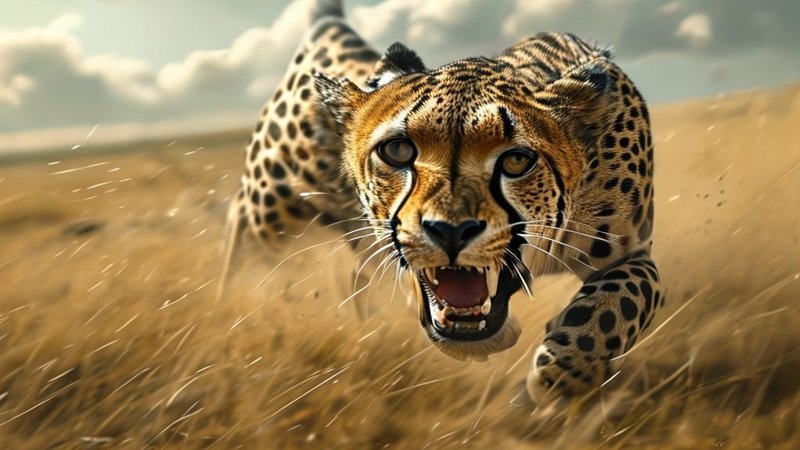
Fossil evidence from places like the Grand Canyon revealed skeletal similarities between *Miracinonyx* and the modern African Cheetah, illustrating convergent evolution—two distinct lineages developing the same solutions for open savanna survival. Yet, while the African cousin adapted, the American counterpart was trapped. Its tail, described as acting like an ‘aircraft rudder’ for 100 km/h turns, could not compensate for the fundamental shift in terrain and competition. Its speed, once its greatest asset, became irrelevant when the environment demanded adaptability over singular prowess. This creature teaches us that absolute power fails when the rules of existence fundamentally change, a lesson echoed in the paradox of reliance on singular strengths.
Frequently Asked Questions
Generated by AI Content Architect
About The Author