Lost Cloud Cities: The Vanished Civilizations of Mountain Peaks & Unsolved Mysteries
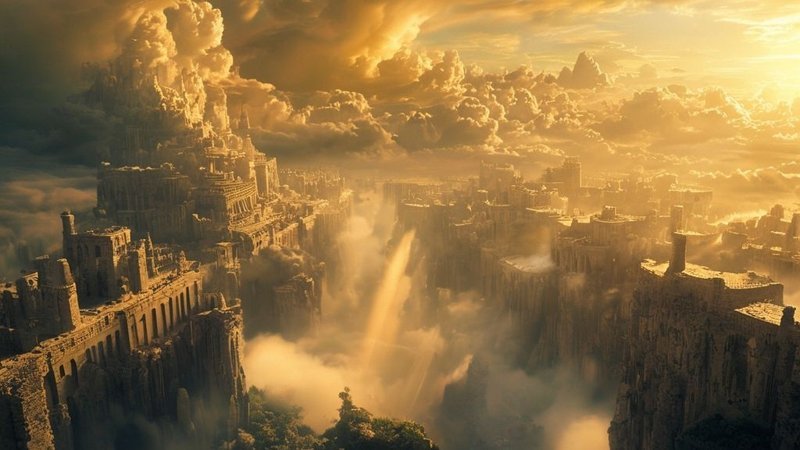
Lost Cloud Cities: The Vanished Civilizations of Mountain Peaks & Unsolved Mysteries
Imagine standing on the edge of an abyss where oxygen ends and imagination begins, to discover stone cities suspended in silent void. Have you ever considered those who abandoned the fertility of valleys to establish their strongholds atop towering mountain peaks amidst dense clouds? Today, we are not merely examining ancient ruins; rather, we are tracing the essence of spirits that ascended to the heavens to forge lost cloud civilizations that vanished, leaving behind an enigma that baffles the mind.
Navigate Content
The Cloud Warriors of Peru: The Chachapoyas Enigma
Lift your gaze from the ground you tread and contemplate those majestic peaks that embrace the sky’s vastness, where peoples who knew no fear of heights once resided. You are now confronted by the ‘Chachapoyas’ people, or as they are known in ancient legends, the ‘Cloud Warriors’. These people did not choose the Peruvian rainforests for their ease; instead, they carved their path towards peaks rising over three thousand meters above sea level. Imagine the immense physical and mental effort these humans expended to build the great city of Kuélap, with its walls soaring twenty meters high. You stand before an engineering marvel centuries ahead of its time, where millions of colossal stone blocks were used to create a fortified citadel overlooking the world from above the clouds. Puma Punku and Göbekli Tepe hint at similar ancient architectural prowess. These warriors did not build their walls solely for protection against earthly enemies; they also sought continuous communion with the spirits they believed resided in the clouds. As you walk among the ruins of their circular homes, adorned with intricate geometric carvings, you will feel the cool air on your face and that strange sensation of both solitude and sublimity simultaneously. This civilization endured for hundreds of years in complete isolation, resisting relentless winds and torrential rains. But the question that will trouble your thoughts is: how did they secure food and water at these soaring altitudes? They developed sophisticated agricultural systems based on terraces embracing the mountain slopes and exploited the high atmospheric humidity to irrigate their crops. Nevertheless, their end was tragic, its mystery enveloping the place like dense dust. When invaders from the Inca Empire arrived, they met fierce resistance from a people who did not fear death, believing they would one day return to the clouds. Today, all that remains of them are those eerie stone sarcophagi suspended in towering mountain crevices, staring at you with empty eyes as if guarding secrets that will never be revealed.
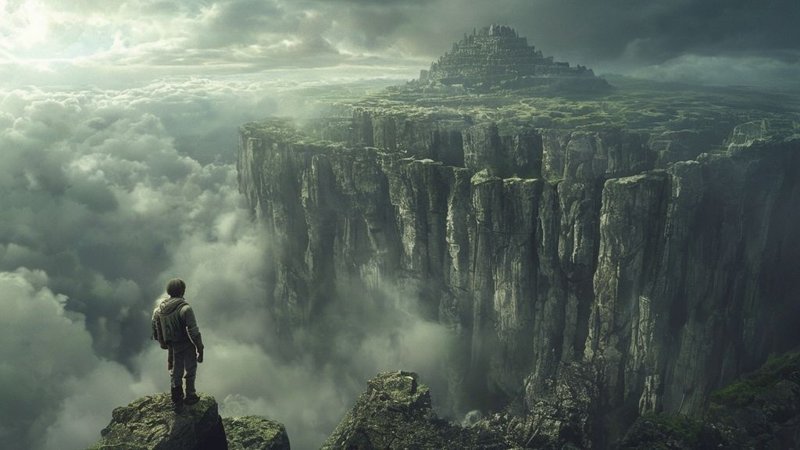
The Vanished Kingdom of Guge in the Himalayas
Now, let your memory and imagination transport you to the other side of the planet, towards the magnificent Himalayas, where the secrets of the lost Kingdom of Guge in Tibet lie hidden. You walk through narrow passages carved into the heart of yellow sedimentary rocks, where the city appears to have sprouted from the very belly of the mountain. This civilization, which flourished for over seven hundred years, was a spiritual and commercial hub connecting India, Tibet, and China. Imagine the thousands of rooms and caves excavated by monks, soldiers, and kings in the vertical cliffs. You gaze upon an intricate network of tunnels connecting the palaces at the summit with the storerooms and dwellings below. In the tenth century AD, this kingdom throbbed with life, gold, and exquisite Buddhist art. But overnight, tens of thousands of its inhabitants vanished, as if the earth had swallowed them whole, or they had ascended to the heavens they had long revered. The sudden disappearance echoes other unsolved mysteries of ancient cities. When you enter the remaining temples, you will see murals whose colors are still vibrant, as if the artist had just left the place. You will be perplexed by the suddenness of this collapse: was war the cause, or did a deadly drought force their departure? The void left by the Kingdom of Guge makes you realize the fragility of human civilizations, regardless of their power or elevation.
Ancestral Puebloans: Architects of the Cliffs
The human desire to live above the clouds was not merely an escape from enemies; it was an embodiment of spiritual ambition, seeking proximity to the Creator. In every mountain civilization, you will find that temples are located at the highest possible point. Consider the Ancestral Puebloans (Anasazi) in the southwestern United States, who built their cities within the high cliff alcoves. Why did they choose these challenging sites, requiring daily ascent of vertical walls? They meticulously observed the stars and designed their homes to align with solstices and lunar cycles, showcasing an advanced understanding of the cosmos, much like the Antikythera Mechanism revealed in ancient Greece. As you gaze upon the ruins of Cliff Palace, you will feel the greatness of these people who tamed the harsh rock to create warm dwellings. However, as with other cloud civilizations, the Ancestral Puebloans suddenly departed at the end of the thirteenth century, leaving behind their pottery and tools, as if intending to return at any moment. This mass disappearance raises questions about our relationship with the environment and how a slight change in climate can crush humanity’s greatest achievements.
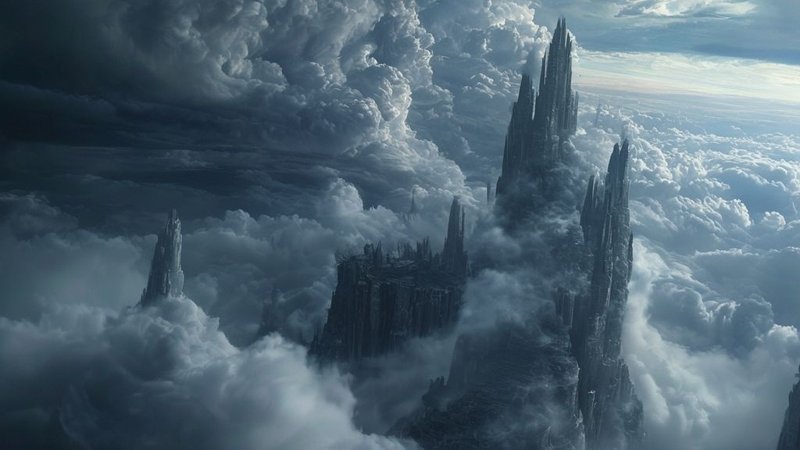
Living Above the Clouds: Adaptations and Ancient Wisdom
Let us now delve into the psychological and technical analysis of these societies. You are undoubtedly wondering how these people coped with oxygen scarcity and extreme cold. Recent studies have shown that high-altitude dwellers developed remarkable genetic and physiological adaptations, allowing their blood to carry greater amounts of oxygen. They were not ordinary humans but beings adapted to a ‘cloud existence.’ Technically, they employed principles of acoustics to restore and build their cities. In some archaeological sites on mountains, it is discovered that the design of buildings allowed whispers to be heard from very long distances, which served as an early warning system against any invasion. They also excelled in astronomy to an extent unimaginable for their era. For them, the stars were a map and a compass, and building their cities high up granted them a clearer view of the cosmos, free from the interference of valley mists. But what of their disappearance? The primary reason researchers pro
Frequently Asked Questions
Generated by AI Content Architect
About The Author