The Enigma of Lake Nyos: The Volcano That Killed 1,700 People Silently

The Enigma of Lake Nyos: The Volcano That Killed 1,700 People Silently
Imagine the air you breathe right now, that invisible companion sustaining your life, suddenly turning against you to become your silent executioner. In a single night steeped in stillness, an anomalous volcanic event suffocated over 1,700 people without a single spark of fire or a drop of molten lava. You are now faced with the enigma of Lake Nyos, where a volcano kills with such chilling silence and precision that it leaves behind nothing but inert bodies, denied even the chance to cry out.
Navigate Content
The Deceptive Calm of a Hidden Killer
Our story begins in Cameroon, specifically in the Western Highlands, where Lake Nyos rests like a blue jewel atop a dormant volcanic crater. You gaze upon its clear waters reflecting the sky, surrounded by green hills that evoke a sense of absolute tranquility. Yet, this visual reality is merely a grand natural deception. Within the depths of this lake, reaching 208 meters, lies a terrifying chemical secret. The volcano here does not eject molten rock; instead, it releases toxic gases that accumulate very slowly over centuries.
The Night the Lake Exploded: August 21, 1986
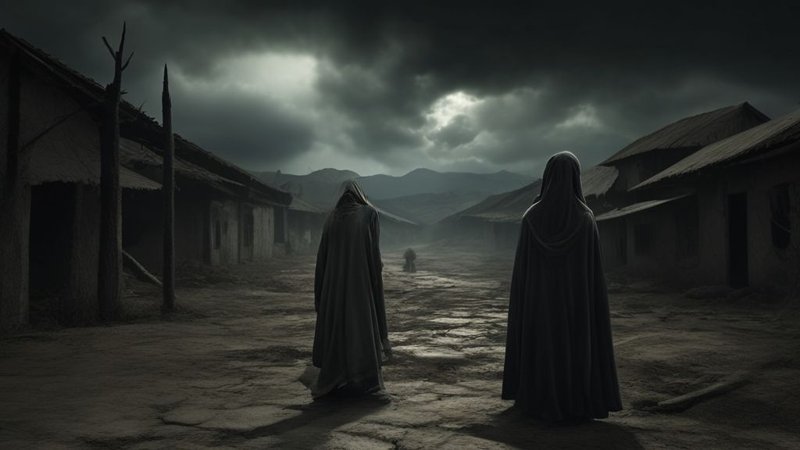
On August 21, 1986, the villages surrounding the lake were preparing for sleep. Life was simple, and the inhabitants felt secure in the tranquility of their natural surroundings. No one knew that the immense water pressure at the bottom of the lake trapped astronomical quantities of carbon dioxide gas beneath its weight. Imagine it as a giant soda bottle, shaken vigorously yet still tightly capped. The pressure at the bottom prevented the gas from rising, creating a saturated, deadly layer awaiting a single trigger to erupt. At 9 PM, something mysterious occurred. Perhaps a small landslide at the lakebed, or simply the gas saturation reaching a point of no return. Suddenly, the lake transformed into a gigantic fountain. A column of water and gas erupted skyward, reaching a height of 100 meters. At that moment, approximately 1.6 million tons of carbon dioxide gas were released. You were not witnessing a fiery explosion, but rather the birth of an invisible, heavy cloud that began to creep across the water’s surface, invading the land.
The Invisible River of Death
Herein lies the true horror that you must comprehend. Carbon dioxide is one and a half times heavier than oxygen. This meant the cloud did not rise and dissipate into the air; instead, it flowed through valleys and depressions like a river of transparent death. The cloud crept at a speed of 50 kilometers per hour, moving towards the villages of Nyos, Nyos, and Subum. You are in your home, hearing a strange sound akin to muffled thunder, yet seeing nothing. There is no odor, no smoke, nothing to warn you of the impending danger. Upon reaching the villages, the cloud entirely displaced the oxygen. Within seconds, the vital supply to every living creature was severed. You attempt to inhale, but your lungs fill with a gas that offers no life. Victims felt no burning pain, nor did they flee from flowing lava. They simply collapsed where they stood. Those speaking ceased mid-sentence. Those cooking fell beside their stoves. And those asleep never awoke. The air had choked them with chilling efficiency.
Dawn of Desolation and Hope for Survival
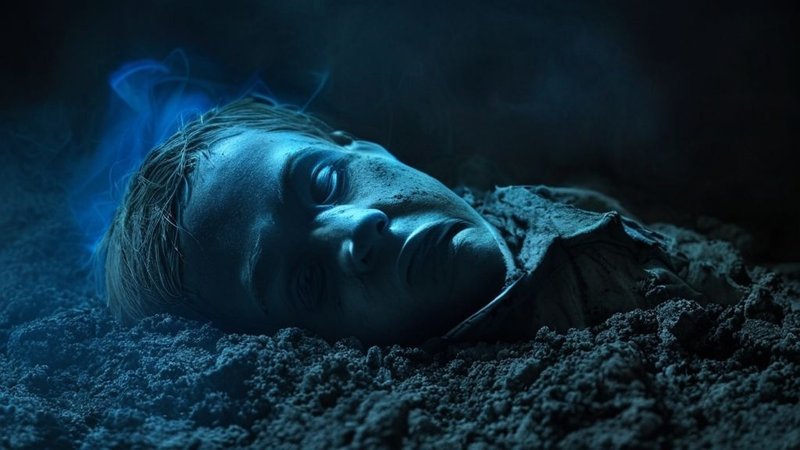
When dawn broke the next day, the scene surpassed any nightmare imaginable. A funereal silence enveloped the area. No barking dogs, no chirping birds, not even the buzz of flies. The cloud had killed everything that breathed within an area extending up to 25 kilometers from the lake’s center. The few survivors found themselves in a world of the dead. 1,746 people lost their lives within hours. Over 3,500 heads of livestock lay scattered across the green grass, like waxen statues. You might now ask, how did some survive? Survivors were those who were in higher elevations, unreachable by the heavy cloud. Some described a sensation of dizziness, or a smell resembling rotten eggs, despite carbon dioxide being odorless. Scientists hypothesize that some sulfur mixed with the eruption, providing a faint warning that ultimately failed to save the vast majority. The bodies showed no signs of struggle; they appeared as if in deep sleep, save for the red patches on some skin, a result of acute oxygen deprivation that ruptured capillaries.
Understanding Limnic Eruptions and Future Vigilance
When investigators and scientists arrived at the site, they were astonished by the lake’s color transformation. That blue jewel, once captivating to observers, had turned a rusty red. This dramatic change was not blood, but iron that had risen from the bottom and oxidized upon contact with the air. The lake was expelling its chemical innards, revealing to the world the horror latent in its depths. You are witnessing a rare phenomenon known as a “limnic eruption,” one of the rarest and deadliest natural disasters on Earth. This incident was not the first; just two years prior, in 1984, a similar event occurred at nearby Lake Monoun, killing 37 people. However, the Nyos disaster was magnitudes larger and drew global attention to these silent volcanoes. Scientists began to realize that some volcanic lakes are not merely bodies of water, but natural reservoirs of weapons of mass destruction. Gas seeps from the magma below and dissolves in the water under immense pressure, awaiting the moment when this pressure equilibrium is disturbed, leading to a catastrophic gaseous eruption. But what about the future? Are you safe if you visit such locations? Today, scientists have installed giant pipes in Lake Nyos to gradually and continuously extract the gas from the bottom. You now see artificial water fountains emerging from the lake’s center, acting as safety valves to release carbon dioxide pressure before it reaches lethal levels. Nevertheless, nature remains inherently unpredictable. Other lakes, such as
- Lake Kivu in East Africa
, contain gas quantities a thousand times greater than what was in Nyos, rendering them ticking time bombs threatening millions of lives. The stories of these victims, who departed in absolute silence, remind us of the insignificance of our power before the Earth’s might.
Frequently Asked Questions
Generated by AI Content Architect
About The Author