Mariana Trench’s Terrifying Sounds: Unraveling the Mystery of Earth’s Deepest Abyss
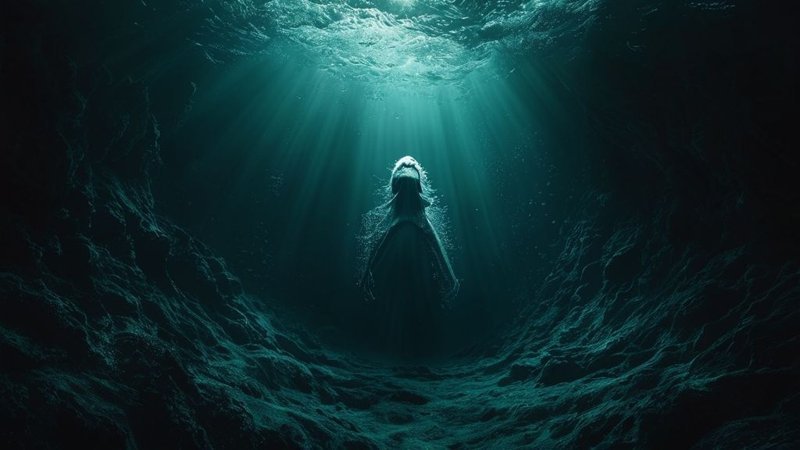
Imagine a place where pressure crushes your bones as if they were fragile glass threads. There, in the abyssal darkness of the Mariana Trench, hydrophones have captured sounds that do not belong to our known world. Immense creatures move in silence, whispering at frequencies that shake the very foundations of the ocean.
You are now descending to a depth exceeding eleven thousand meters beneath the surface of the Pacific Ocean. Here in the Mariana Trench, light ceases to exist entirely after crossing the initial one-thousand-meter threshold. You enter a realm of perpetual darkness, where the pressure intensifies to eight tons per square inch. This pressure is equivalent to an elephant standing on your thumb, or five Boeing 747 aircraft resting on your chest. In this deadly stillness, humans might assume silence reigns, yet the reality is far more terrifying. Science has explored merely five percent of the ocean’s depths; the remainder persists as a mystery, echoing through advanced listening devices.
The Enigmatic ‘Western Pacific Twang’
In 2014, researchers from Oregon State University deployed titanium-encased hydrophones to the trench floor. The mission aimed to record ambient noise for three consecutive weeks. What they retrieved was not merely the sound of waves or passing vessels. They registered an enigmatic sound, later dubbed the ‘Western Pacific Twang’. It is a metallic sound, strikingly similar to spaceships in science fiction films. This sound begins at a low frequency of thirty-eight hertz, then concludes with a sharp shriek reaching eight thousand hertz. This broad and complex frequency range cannot be attributed to tectonic plate movement, nor can it be ascribed to an underwater volcanic eruption. The rhythmic nature and repetition strongly indicate an organic source: a living organism possessing a vocal apparatus far more sophisticated than anything previously observed by science. For insights into other unexplained phenomena and deciphering enigmatic patterns, delve into our collection of mysteries.
Colossal Beings and Unprecedented Adaptations
One must grasp the magnitude of the disparity between what we know and what remains unknown. The blue whale, the largest creature to have ever lived on Earth, emits sounds capable of traversing vast distances across the ocean. However, blue whale vocalizations are precisely understood and possess a regular, easily identifiable pattern. The frequencies captured in the Mariana Trench were considerably deeper and more powerful. Comparing the acoustic data reveals that the wavelength of these sounds points to a colossal thoracic cavity. In acoustic physics, the size of an organism is directly proportional to the lowest frequency it can produce. For a creature to emit a sound of such depth and power, capable of penetrating the water density at the trench floor, its size must be several times that of a blue whale, which reaches thirty meters in length. We are discussing entities potentially exceeding fifty or sixty meters, residing in an area unreachable by our nets or cameras.
Consider the hydrostatic pressure once more. How can any organic tissue withstand such conditions? The answer lies in remarkable biological adaptation. Organisms inhabiting these depths do not possess air-filled cavities in their bodies, such as the conventional lungs we know. Their bodies consist predominantly of incompressible fluids and cartilage. When examining very low frequencies, or infrasound, it becomes evident that their production demands immense energy. Generating such energy necessitates a unique metabolic process. Perhaps these creatures subsist on marine snow – the organic detritus falling from above – or perhaps they rely on other colossal organisms yet to be discovered. The captured sounds were not isolated; they often appeared to be a dialogue between distant entities. A sonic echo reverberating in the abyss, informing us of an entire society of giants dwelling beneath our feet.
Echoes from the Deep: ‘The Bloop’ and Beyond
In 1997, an array of hydrophones belonging to the U.S. Navy detected a sound known as ‘The Bloop’. It was a sound so powerful that it was picked up by sensors located over five thousand kilometers apart. At the time, some attempted to explain it as the result of icebergs fracturing in Antarctica. However, analysts examining the acoustic signature identified unmistakable biological characteristics. The frequency rapidly ascended then faded in a manner resembling calls from living organisms, but on an amplification scale exceeding any known creature. Comparing this to what occurs in the Mariana Trench, we find that the abyssal depths function as a colossal echo chamber. Water transmits sound four and a half times faster than air. In this dense medium, vision becomes useless, and sound emerges as the sole sense for survival. Creatures emitting these sounds are not vocalizing in vain; they are mapping their environment and potentially communicating with peers across entire oceans. Just as the octopus defies scientific understanding, these deep-sea entities challenge our perception of life.
Unanswered Questions of the Abyss
One might ask, why do we find it challenging to accept the existence of these giants? Perhaps it is because our imagination is confined by what we observe on the surface. In the 19th century, scientists ridiculed the notion of the giant squid, dismissing it as a mere sailor’s myth. Today, we know the giant squid exists, with eyes the size of dinner plates, enabling it to perceive bioluminescent light in the darkness. The Mariana Trench is significantly deeper than the giant squid’s habitat. Acoustic data extracted from there reveal complex patterns of pulses. In one recording, a low-frequency pulse was detected, recurring with extreme precision every ten seconds. This is not a geological disturbance; geology does not follow a cardiac rhythm. This appears to be the pulse of an immense heart, or the movement of enormous fins displacing tons of water with each beat.
When attempting to match this data with known organisms, we fail to find a single one-hundred-percent correlation. Minke whales produce similar sounds, but they lack the destructive power of these abyssal frequencies. Sperm whales dive to great depths, yet they cannot reach the Mariana seabed, as their lungs would simply implode. This enduring mystery underscores the vast unknown that still exists beneath the waves, inviting us to ponder what other deep secrets the ocean holds.
Frequently Asked Questions
What did scientists discover at the deepest point on Earth, the Mariana Trench?
In the Mariana Trench, hydrophones captured enigmatic and terrifying sounds, suggesting the presence of colossal, unknown creatures, unlike anything previously observed.
What is the ‘Western Pacific Twang’?
The ‘Western Pacific Twang’ is a mysterious, metallic sound recorded in the Mariana Trench in 2014 by Oregon State University researchers. It spans a broad frequency range (38 to 8000 hertz) and its rhythmic, repetitive nature strongly indicates an organic, biological source rather than geological activity.
What kind of creatures are believed to be making these sounds?
Based on acoustic data, the sounds suggest creatures with colossal thoracic cavities, potentially exceeding 50-60 meters in length – several times the size of a blue whale. These organisms are believed to possess sophisticated vocal apparatuses and unique biological adaptations to withstand extreme hydrostatic pressure.
How can organisms survive the extreme pressure of the Mariana Trench?
Deep-sea organisms in the Mariana Trench adapt by not having air-filled cavities like lungs. Their bodies primarily consist of incompressible fluids and cartilage. Generating the immense energy required for producing infrasound also necessitates unique metabolic processes.
What is ‘The Bloop’ and how does it relate to the Mariana Trench sounds?
‘The Bloop’ was a powerful, unidentified sound detected by the U.S. Navy in 1997, picked up across vast distances. Its acoustic signature suggested biological characteristics on an unprecedented scale. Like the Mariana Trench sounds, ‘The Bloop’ points to the existence of unknown, colossal marine life in the deep ocean.