Basilosaurus: The Terrifying Ancient Whale King of the Oceans | 40 Million Years Ago

0
image_1-83


Basilosaurus: The Terrifying Ancient Whale King of the Oceans | 40 Million Years Ago
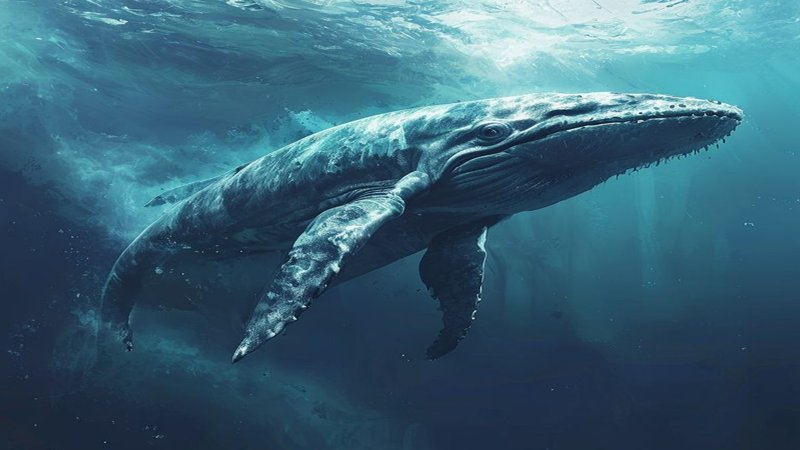
Imagine yourself suspended in ocean waters vastly different from those of today. The water is suffocatingly warm. An endless blue expanse stretches beneath your feet. Suddenly, a muffled vibration resonates deep within your chest. It is not merely a sound, but a terrifying mechanical frequency that rends the water’s stillness. From the absolute darkness below, a colossal phantom begins its ascent. Its body is unnaturally elongated. It resembles a legendary sea serpent, yet is twice the immense size of a school bus. This creature is neither fish nor reptile. It is Basilosaurus, the tyrannical monarch that dominated the oceans forty million years ago. In that epoch, the seas were not a leisurely domain, but a vast arena of primal execution. You are now witnessing the golden age of beasts that relinquished terrestrial life to conquer the aquatic realm.


Basilosaurus: The Misunderstood Mammal King of the Tethys Sea
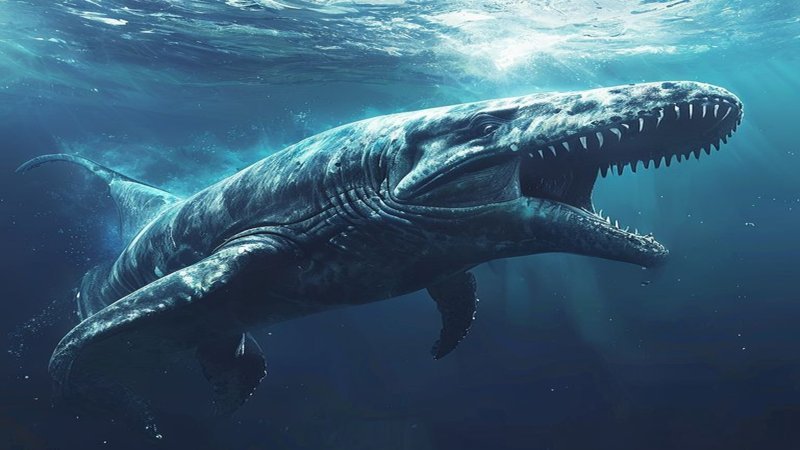
Before comprehending how this leviathan became the undisputed master of the seas, one must appreciate the irony inherent in its name. The term Basilosaurus literally translates to “king of lizards.” When scientists unearthed its initial remains in the 19th century, they presumed they had discovered a colossal marine dinosaur. The truth, however, proved far more astonishing. This creature is, in fact, a mammal. It is a distant ancestor of the whales known today. Yet, it possessed none of the docile nature of the blue whale. It was a meticulously engineered killing machine, designed to crush bone and rend flesh. Its body, stretching up to eighteen meters in length, was not laden with blubber like its modern cetacean counterparts. Instead, it was lean and muscular, propelling itself through the water with serpentine undulations. You are observing a creature weighing six tons of pure, unadulterated muscle.

Basilosaurus: The Misunderstood Mammal King of the Tethys Sea


Evolutionary Echoes: Vestigial Limbs and Ancient Journeys

Examine its skeletal structure closely. You will discern a highly peculiar feature at the posterior of its body: a pair of vestigial hind limbs. These rudimentary feet measure no more than thirty-five centimeters in length. These limbs were unsuitable for ambulation, or even for effective swimming. They are evolutionary remnants from its quadrupedal ancestors, who once strode across sandy shores. Contemplate the epic evolutionary journey undertaken by this lineage: from a small, dog-like terrestrial creature to this indomitable giant of the ocean depths. These diminutive limbs serve as tangible evidence of one of nature’s grandest transformations. They are a stark reminder that evolution does not entirely obliterate the past, but preserves it as a testament to profound power and adaptability.


The Apex Predator’s Arsenal: Jaws, Senses, and Prey

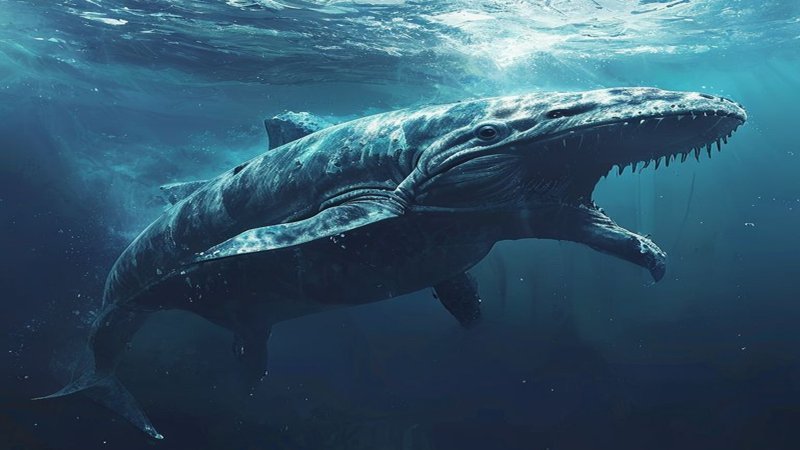
To observe Basilosaurus in pursuit of prey is to comprehend the essence of true terror. Basilosaurus lacked the sophisticated echolocation system possessed by modern whales. It relied instead on acute vision and submerged auditory perception. Its elongated skull, extending up to one and a half meters, was armed with an array of formidable teeth. The anterior teeth were conical, specialized for gripping prey and preventing escape. Conversely, its posterior teeth were distinctly serrated, designed with a saw-like efficiency for shearing flesh and crushing bone. When its jaws clamped shut upon a victim, it generated immense pressure, exceeding thousands of pounds per square inch. Scientists have discovered Dorudon skulls, belonging to a smaller ancient whale species, bearing distinct perforations. These punctures precisely match the dentition pattern of Basilosaurus. This indicates that it preyed upon the young of other cetaceans, treating them as casual sustenance.

For a moment, place yourself in the predicament of its prey. You are navigating the warm waters of the Tethys Sea. A sudden shift in water pressure behind you alerts your senses. You turn to witness that tapered head hurtling towards you with astonishing velocity. In the vast expanse of the open ocean, sanctuary is non-existent. Basilosaurus does not engage in prolonged pursuits. It relies on the element of surprise and overwhelming brute force. A single, precise strike to the cranium or spinal column was sufficient to incapacitate any organism. In that terrifying instant, you comprehend that you confront not merely an animal seeking sustenance, but the apex predator of its era, a creature no contemporaneous shark would dare challenge.
The Apex Predator's Arsenal: Jaws, Senses, and Prey


The Fall of a King: Climate Change and Extinction

The Tethys Sea, the domain of this colossal predator, was a profoundly different world. It spanned what is now North Africa, Europe, and South Asia. Its waters were shallow, teeming with vibrant coral ecosystems and colossal fish. However, the global climate began to shift. The Earth began to cool, transforming the once warm and hospitable oceans into increasingly harsh environments. Herein lies the profound tragedy of this giant. Its elongated, slender physique, an asset in warm, shallow waters, became a significant liability in the vast, frigid open oceans. It lacked the crucial insulating blubber layer that shields modern whales from lethal cold. Furthermore, its serpentine locomotion was inefficient for traversing the immense distances required in deep, cold oceanic waters.

One must reflect upon the philosophy of survival illustrated here. Raw strength alone does not guarantee persistence. Basilosaurus was indeed the strongest, largest, and most ferocious. Yet, it remained a captive of its environment. As sea levels receded and the warm, shallow seas vanished, this king found itself without a kingdom. Prey populations began migrating to colder, deeper regions, and Basilosaurus could not adapt to pursue them effectively. Malnutrition began to debilitate its magnificent physique, and its populations gradually dwindled until it vanished entirely from the living record approximately thirty-four million years ago. It left behind only skeletal remains, entombed in sand, awaiting discovery millions of years later.

Today, one can visit a site known as Wadi El Hitan (Valley of Whales) in Egypt’s Western Desert. There, a breathtaking spectacle awa


Frequently Asked Questions

What was Basilosaurus, and why is its name ironic?
Basilosaurus was an ancient mammalian whale, a distant ancestor of modern whales, that ruled the oceans 40 million years ago. Its name, meaning ‘king of lizards,’ is ironic because early scientists mistakenly identified its remains as a colossal marine reptile before realizing it was, in fact, a mammal.
Did Basilosaurus have any unusual physical characteristics?
Yes, Basilosaurus was unique for its extremely elongated, slender, and muscular body, reaching up to 18 meters in length. Most notably, it possessed a pair of small, vestigial hind limbs (about 35 cm long) at its posterior, which were evolutionary remnants from its quadrupedal land-dwelling ancestors.
How did Basilosaurus hunt its prey in the Tethys Sea?
Basilosaurus did not have echolocation like modern whales. Instead, it relied on acute vision and submerged auditory perception. Its powerful, 1.5-meter skull was armed with conical front teeth for gripping and serrated back teeth for shearing flesh and crushing bone. Evidence suggests it ambushed and preyed on the young of other ancient whale species like Dorudon.
Why did this dominant predator eventually go extinct?
Basilosaurus’s extinction was primarily due to global climate change. As the Earth cooled and the warm, shallow Tethys Sea transformed into deeper, colder oceans, its slender body lacked the insulating blubber necessary for cold waters, and its serpentine movement was inefficient for traversing vast oceanic distances. This inability to adapt led to dwindling prey and eventual demise.
Where can one find evidence of Basilosaurus today?
One of the most significant sites for discovering Basilosaurus fossils is Wadi El Hitan (Valley of Whales) in Egypt’s Western Desert. This UNESCO World Heritage site offers a unique glimpse into the lives of ancient whales.

Generated by AI Content Architect

About The Author

Leave a Reply

Your email address will not be published. Required fields are marked *