The Well of Barhout: Truth Behind Yemen’s Prison of the Jinn Sinkhole
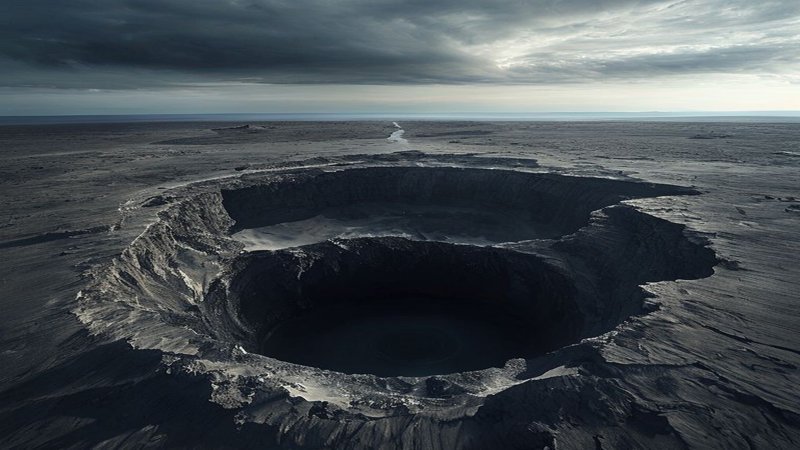
The Well of Barhout: Truth Behind Yemen’s Prison of the Jinn Sinkhole
For centuries, the Bir Barhout in Yemen’s Al Mahra desert has been shrouded in terrifying folklore—a suspected gate to Hell, a prison for malevolent jinn, and a source of the world’s foulest odors. However, when modern explorers finally breached its impenetrable darkness, they discovered a reality far stranger and more beautiful than any legend. Prepare to confront the truth behind this enigmatic abyss.
Navigate Content
The Labyrinth of Lore: Legends of the Well of Hell
The name Bir Barhout (Well of Hell) struck fear into the hearts of locals, who believed it was the most detested spot on Earth. Narratives painted it as a cosmic prison where tormented spirits were held, warning that its rumored stench could kill any approaching soul. Standing on the edge of this thirty-meter-wide gap revealed only absolute blackness, reinforcing primal awe. The profound silence, broken only by the wind sounding like a ‘sleeping beast’s breath,’ fostered centuries of taboo that kept humanity at bay. This fear was deeply woven into the local consciousness, yet curiosity, the engine of progress, demanded investigation.
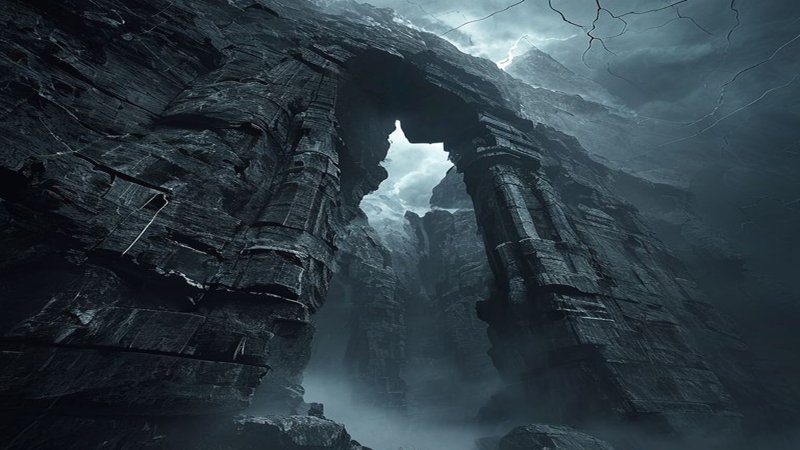
The Descent: Trading Darkness for Geological Majesty
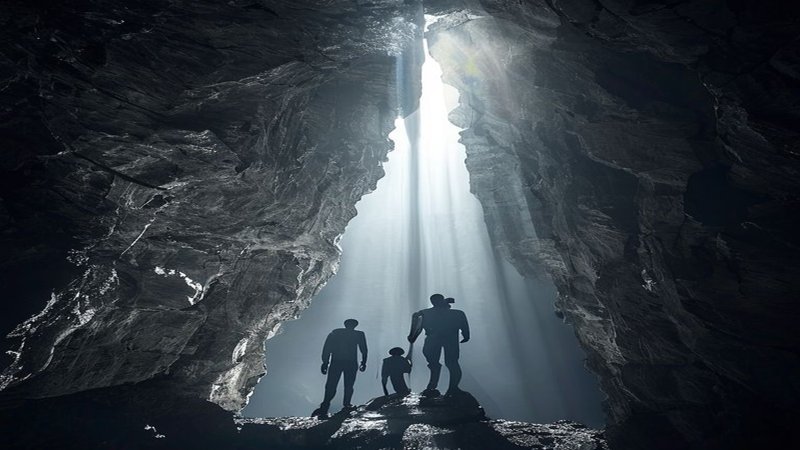
In 2021, an Omani cave exploration team equipped with advanced gear committed to exploring the chasm. The descent was a journey against gravity and legend. As the team rappelled, the sunlight above shrank to a distant circle. Humidity rose, and the air grew cool—a stark contrast to the expected heat of a fiery underworld. Upon reaching 112 meters, the first human foot touched the bottom. Instead of demonic signs, the headlamps illuminated a breathtaking geological museum. The walls displayed formations eroded over millions of years, transforming the mythical prison into an astonishing subterranean landscape.
An Oasis of Life: Waterfalls and ‘Cave Pearls’
The reality at the bottom defied all speculation about buried treasure or lost souls. The expedition discovered:
- Freshwater Waterfalls: Water bubbled from cave walls, nourishing the floor soil, creating a cool and refreshing environment.
- The Odor’s Source: The foul smells were identified as natural sulfurous gases and the decomposition of birds that had accidentally fallen in.
- Cave Pearls: Smooth, lustrous calcareous spheres, formed over millennia by mineral-saturated drips, lay scattered like jewels.
The ecosystem was sparse but intact, featuring non-venomous snakes and birds nesting in protected crevices, showcasing life adapting to isolation.
Science Unveils the Sinkhole: The Triumph Over Superstition
Laboratory analysis of the collected samples confirmed that the Bir Barhout is a natural geological feature—a massive sinkhole or doline. This structure was formed through the slow dissolution of limestone by groundwater deep beneath the surface, eventually causing the surface to collapse. Estimated to be millions of years old, it serves as a profound record of the Arabian Peninsula’s geological past. This scientific breakthrough proved that the ‘monsters’ were simply knowledge gaps. As the text notes, fear of the unknown often leads humans to populate voids with terrifying narratives. Science, in this instance, replaced illusion with empirical wonder. For further reading on how science tackles deep geological puzzles, explore Göbekli Tepe: The 12,000-Year-Old Enigma That Rewrites Human History.
A Lesson in Inquiry: Knowledge Over Illusion
The journey into Barhout is a powerful allegory for human curiosity. It reminds us that many ancient taboos and frightening mysteries simply mask natural phenomena awaiting logical explanation. The transformation of the ‘Prison of the Jinn’ into a scientific site underscores the vital importance of scrutiny and daring to explore the forbidding. Knowledge is the only light that dispels the shadows of fear. This endeavor proves that astonishing wonders await discovery through the lens of science, not superstition. Discover other mysteries solved (or deepened) by science, such as Libyan Desert Glass Mystery: Tutankhamun’s Scarab and Cosmic Catastrophe.
Frequently Asked Questions
Generated by AI Content Architect
About The Author