Otzi the Iceman: Europe’s Oldest Murder Mystery and the Legend of His Curse
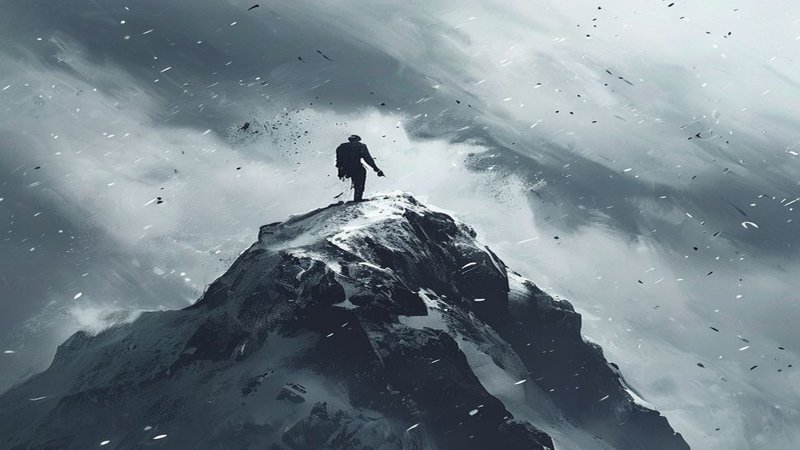
Imagine standing at an altitude of 3,210 meters above sea level, where winds tear through the silence and ice engulfs every trace of life. There, in the heart of the Ötztal Alps, between Austria and Italy, your foot stumbles upon something that does not belong to this era. A frozen human body emerges from the melting snow, opening a chilling chapter in humanity’s criminal history. It is not merely a victim of a recent climbing accident, but a profound secret that has remained preserved for over 5,300 years.
On September 19, 1991, German couple Helmut and Erika Simon were enjoying an unusual mountain hike. They had no idea their outing would turn into a global discovery that would shake the foundations of science. At the edge of the Similaun Glacier, they spotted a body protruding from the ice. At that moment, it was widely believed to be the corpse of a mountaineer who had perished in recent decades, perhaps from World War I or II. But the truth was far deeper within the womb of time. Attempts to extract the body began with shockingly primitive methods. Early excavators used pickaxes and pneumatic drills, causing severe damage to the body’s left thigh. They did not realize they were handling Europe’s oldest natural human mummy. This ancient discovery would soon rewrite parts of human history.
Unveiling Ötzi’s Copper Age Life
Once the body arrived at the laboratories in Innsbruck, astounding facts began to unfold like autumn leaves. You are now looking at a man who lived in the Copper Age, a man who witnessed the dawn of civilization before the pyramids of Egypt were built and before Stonehenge rose in England. Scientists named him Ötzi, after the location where he was found. Meticulous forensic investigations began to dissect his life and death. Examinations revealed that Ötzi was a middle-aged man, approximately forty-five years old, 160 centimeters tall, and weighed approximately fifty kilograms at the time of his death. His body was covered with sixty-one mysterious tattoos. These tattoos were not for adornment but were concentrated in areas of the joints and back, leading researchers to believe they were a form of primitive therapy or acupuncture to alleviate the pain of arthritis he suffered from. His story became a true mystery, captivating researchers worldwide.
The Oldest Murder in History
But the question that continued to vex investigators was how Ötzi died. Initially, everyone believed he was a victim of harsh weather conditions, succumbing to cold and hunger and taking his final rest in the embrace of the ice. However, in 2001, CT scans revealed a hidden secret beneath his left shoulder: a flint arrowhead deeply embedded in his body. This discovery completely shifted perceptions. We are not talking about an accidental death but a deliberate murder that occurred thousands of years ago. The arrow had pierced his shoulder blade and severed a major artery, causing severe and rapid internal bleeding. The wound was fatal, granting him only a few minutes before his life ebbed away. This unsolved crime remains one of humanity’s most compelling ancient puzzles.
A Desperate Escape and Final Stand
The forensic analysis did not stop there; it delved deeper into studying the contents of his stomach. Examinations revealed that his last meal was extremely heavy, consisting of ibex meat, wheat bread, and fern. He consumed this meal a very short time before his death, suggesting that he did not anticipate the attack. Perhaps he was resting after an arduous journey. But there is another piece of evidence that tells a story of bitter struggle: researchers found a deep wound on his right hand between the thumb and forefinger. This type of wound is called a defensive wound in forensic medicine, occurring when a victim attempts to grasp a knife blade or a sharp weapon with their hand. This means Ötzi had been involved in a hand-to-hand struggle one or two days before his death.
Ötzi’s final journey was one of escape, not a hunting trip. Pollen analysis from his intestines revealed his movement trajectory with astounding precision. He had ascended from low-lying valleys, where trees bloom in spring, to high altitudes within a few hours. He was running for his life, pursued by enemies who left him no opportunity for rest. The blood found on his clothes and weapons was not solely his; scientists found traces of blood from four different individuals: blood on his knife blade, blood on his arrows, and blood on his coat. This paints a picture of a fierce warrior who fought a desperate battle against multiple attackers before being treacherously struck down by an arrow in his back.
The Terrifying Curse of the Iceman?
Following Ötzi’s extraction, a series of eerie events began, instilling fear in many. Rumors spread about the curse of the Iceman, much like the curse of the pharaohs. The list of those affected is unsettling:
The first victim was Dr. Rainer Henn, head of the forensic team who examined the body with his bare hands. He died in a horrific car accident while on his way to deliver a lecture about Ötzi.
Shortly thereafter, Kurt Fritz, the professional mountaineer who led the team to the mummy’s location, passed away. He died in an avalanche in an area he knew intimately, and he was the only one in his group who perished in that incident.
The deaths did not stop there. Helmut Simon, the man who discovered the mummy, disappeared under mysterious circumstances during another climbing trip in 2004. After an arduous search, his body was found, fallen from a steep, snow-covered cliff.
Ironically, the funeral was held just hours after Helmut’s body was found. Immediately after the funeral, Dieter Warnecke, head of the rescue team that searched for Helmut Simon, died due to a sudden heart attack at the age of forty-five.
The list of fatalities also included Konrad Spindler, the scientist who spearheaded the initial research on Ötzi, who died from complications of multiple sclerosis.
He was then followed by Tom Loy, the archaeologist who discovered human blood on Ötzi’s tools, who passed away from a rare blood disorder.
Is it truly a curse, or merely a statistical coincidence in a dangerous work environment? One must realize that working at high altitudes and handling ancient remains carries immense biological and environmental risks. This enduring enigma leaves many pondering the dark psychology of disaster and belief.
Frequently Asked Questions
Who was Ötzi the Iceman and when was he discovered?
Ötzi was a middle-aged man from the Copper Age, approximately 45 years old, whose naturally mummified body was discovered on September 19, 1991, in the Ötztal Alps between Austria and Italy. He is Europe’s oldest natural human mummy, preserved for over 5,300 years.
How did Ötzi the Iceman die?
Initially thought to be a victim of the elements, CT scans in 2001 revealed a flint arrowhead embedded in Ötzi’s left shoulder, severing a major artery. This indicates he was deliberately murdered and died from rapid internal bleeding, likely within minutes of being struck.
What evidence suggests Ötzi was involved in a struggle before his death?
Forensic analysis of Ötzi’s stomach contents showed he ate a heavy meal shortly before his death, suggesting he was resting. However, a defensive wound on his right hand, typically sustained when grabbing a blade, indicates he was involved in a hand-to-hand struggle one or two days prior. Furthermore, blood from four different individuals was found on his clothes and weapons, painting a picture of a fierce battle against multiple attackers.
What is the ‘Curse of the Iceman’?
The ‘Curse of the Iceman’ refers to a series of mysterious deaths that have affected people closely involved with Ötzi’s discovery and research. Similar to the ‘curse of the pharaohs,’ victims include the discoverer Helmut Simon, the forensic team leader Dr. Rainer Henn, the guide Kurt Fritz, rescue team head Dieter Warnecke, and lead researchers Konrad Spindler and Tom Loy, among others.
What unique physical features did Ötzi possess?
Ötzi’s body was covered with sixty-one mysterious tattoos, concentrated on areas of his joints and back. Researchers believe these were not for adornment but served as a form of primitive therapy or acupuncture to alleviate pain from arthritis, a condition he suffered from.