What Happens When Stars Die? The Astonishing Secrets of Black Holes and Neutron Stars

0
image_1-42


What Happens When Stars Die? The Astonishing Secrets of Black Holes and Neutron Stars
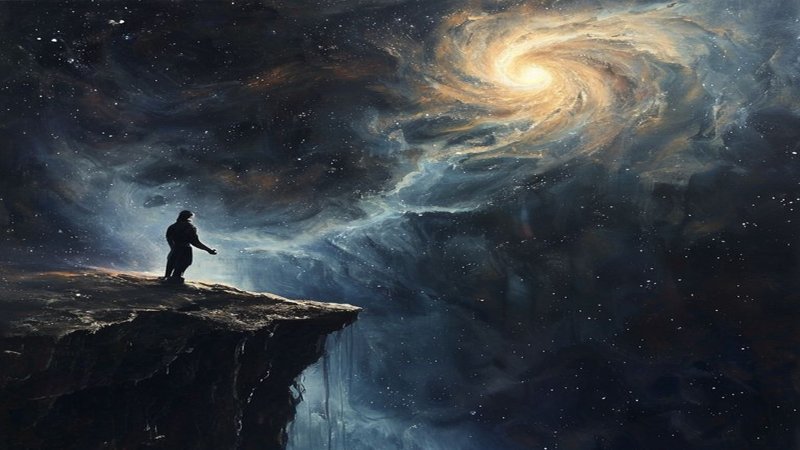
Imagine the corpse of a dead star capable of engulfing space and time within its dark maw. You now stand at the precipice where the laws you know cease to apply, and the terrifying legends of the cosmos begin. What truly transpires when a cosmic giant decides to draw its final breath in an explosion that illuminates an entire galaxy?


The Cosmic Struggle: A Star’s Fiery Life and Inevitable End
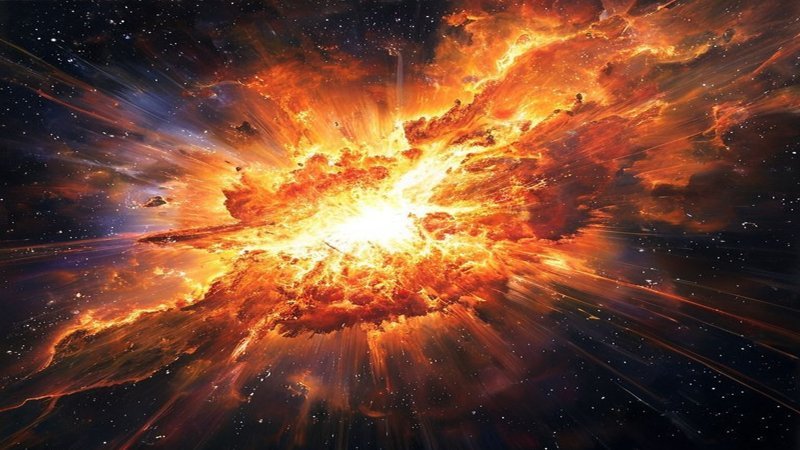
Gaze into the sky on a clear night, far from the clamor of city lights. The luminous points you perceive are not mere lamps suspended in the tranquil night. They are colossal nuclear reactors engaged in an eternal struggle against an unrelenting force: gravity. For millions of years, a star maintains its equilibrium by fusing hydrogen into helium. This reaction generates immense outward pressure, counteracting the gravitational force attempting to crush the star towards its core. However, fuel is not eternal. Once hydrogen is depleted, the star begins to fuse progressively heavier elements, transitioning from helium to carbon, then oxygen, and finally silicon. With each stage, the temperature escalates, and the star becomes increasingly unstable and turbulent. You are now witnessing the final moments of a dying giant.

The Cosmic Struggle: A Star's Fiery Life and Inevitable End


Supernovae: The Universe’s Ultimate Fireworks

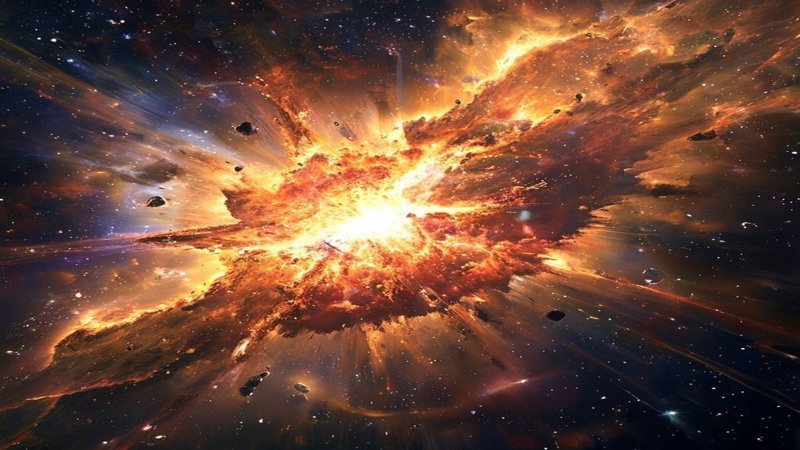
The journey reaches its inexorable end with the element iron. Iron is the cosmic ash that the star can no longer fuse to produce energy. At this critical juncture, equilibrium collapses entirely. Gravity finally triumphs in its protracted battle. In less than a single second, the star’s core, once the size of Earth, implodes to the dimensions of a small city. This instantaneous collapse generates a colossal rebounding shockwave that explodes outward. This is a supernova – the ultimate explosion, expelling the star’s internal matter into space at speeds approaching a significant fraction of the speed of light. Yet, the true story does not conclude here; it merely begins from beneath the ashes. What remains at the core will determine the fate of the surrounding spacetime for billions of years to come.


Neutron Stars: Density Beyond Imagination

If the collapsed stellar core possesses a mass ranging from 1.5 to 3 times that of our Sun, you will witness the birth of one of existence’s most enigmatic objects: a neutron star. Envision a single, massive particle the size of a city, yet weighing more than the entire Sun. Within this environment, matter is compressed to such an extent that protons and electrons merge to form neutrons. The density of this object transcends all limits of human comprehension. A single teaspoon of neutron star material weighs approximately a billion tons, equivalent to the mass of Mount Everest compressed into the volume of a sugar cube. You are now confronting a cosmic laboratory of extreme physics, where gravity on its surface is two billion times that of Earth. Should you fall onto its surface, your body would disintegrate into its constituent atoms in less than a millionth of a second.

These neutron stars are not merely silent spheres of dense matter. They rotate on their axes at astonishing speeds, sometimes hundreds of times per second. Due to this rotation and their immense magnetic fields, they emit beams of radiation from their poles. When these beams intersect Earth’s trajectory, we observe them as regular pulses, akin to a lighthouse beacon in the dark oceans. Scientists have termed this phenomenon “pulsars.” They are the most precise clocks in the universe. However, an even more terrifying variant exists: the magnetar. This object possesses a magnetic field a thousand trillion times stronger than Earth’s. Should you approach a magnetar within a mere thousand kilometers, its magnetic force would tear apart the chemical bonds in your body’s molecules, transforming you into a cloud of atomic dust in the blink of an eye.
Neutron Stars: Density Beyond Imagination


Black Holes: The Ultimate Gravitational Abyss

But what if the collapsed stellar core is far more massive? What if its mass exceeds three times that of the Sun? In this scenario, no known force in the universe can halt the collapse. Neither neutrons nor any physical pressure can withstand gravity’s ultimate grasp. The star collapses infinitely upon itself until it shrinks into a single point of infinite density called a singularity. A black hole has now been born. You are now gazing into a region of spacetime from which escape is impossible, even for light, the fastest entity in existence. The boundary of this black hole is termed the event horizon. Once you cross this threshold, you are completely severed from the universe as you know it. Inside a black hole, space and time exchange roles. Your path toward the center becomes as inexorable as time’s march into the future. For more on the extreme nature of spacetime, explore Spacetime’s Unheard Scream: The Terrifying Reality of Gravitational Waves & Cosmic Collisions.

Black holes are not merely monsters that devour everything; they are powerful cosmic engines. When gas or an unfortunate star approaches a black hole, it does not fall directly in. Instead, it forms a superheated, swirling disk called an accretion disk. Friction within this disk elevates temperatures to millions of degrees, causing it to emit X-rays and radiation visible across galaxies. At the centers of large galaxies reside supermassive black holes, weighing millions or billions of times our Sun’s mass. These behemoths govern the fate of entire galaxies. They regulate star formation and gas flow, positioning them as the grand architects of cosmic construction. Without these black holes, galaxies would not exist in their current form, and perhaps the stable environment necessary for the genesis of our solar system would never have materialized.


We Are Stardust: Why Stellar Deaths Matter

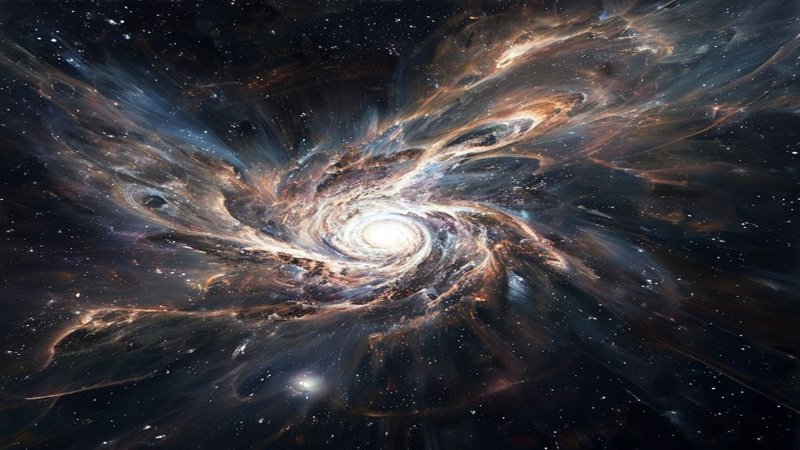
You might now wonder why a human living on a small planet should care about these distant and terrifying explosions. The answer lies within your blood, the atoms of your body, and the gold you wear. In its infancy, the universe contained only hydrogen and helium. All the heavier elements that constitute our world were forged in the hearts of stars and during their spectacular explosive deaths. You are, quite literally, made of stardust. The iron carrying oxygen in your veins was produced in the core of a giant star billions of years ago. Gold, platinum, and uranium were also created in these extreme cosmic events.

Here’s a breakdown of elements created:

  • Light elements (Hydrogen, Helium): Formed in the Big Bang.
  • Medium elements (Carbon, Oxygen, Iron): Forged in the cores of stars through nuclear fusion.
  • Heavy elements (Gold, Platinum, Uranium): Created during supernovae explosions and neutron star mergers.
We Are Stardust: Why Stellar Deaths Matter


Frequently Asked Questions

What causes stars to die?
Stars die when they exhaust their nuclear fuel (primarily hydrogen), causing the outward pressure from fusion to cease. Gravity then overcomes the internal pressure, leading to a rapid collapse and often a massive explosion.
What are neutron stars, pulsars, and magnetars?
A neutron star is an incredibly dense remnant of a massive star’s core after a supernova, where protons and electrons merge to form neutrons. Pulsars are rapidly rotating neutron stars that emit beams of radiation, observed as regular pulses from Earth. A magnetar is a type of neutron star with an exceptionally powerful magnetic field, a thousand trillion times stronger than Earth’s.
How does a black hole form and what is an event horizon?
A black hole forms when the collapsed core of a star, after a supernova, is so massive (exceeding about three times the Sun’s mass) that no known force can stop its gravitational collapse. It shrinks infinitely into a point of infinite density called a singularity. The event horizon is the boundary around a black hole beyond which nothing, not even light, can escape.
Why are stellar deaths important to human existence?
Stellar deaths, particularly supernovae, are crucial because they are responsible for forging and dispersing all the heavier elements in the universe beyond hydrogen and helium. These elements, including carbon, oxygen, iron, and gold, are the building blocks of planets, life, and even our own bodies – meaning we are literally “stardust.”

Generated by AI Content Architect

About The Author

Leave a Reply

Your email address will not be published. Required fields are marked *