The Etruscan Enigma: Rome’s Lost Civilization & The Mystery of Its Erased History
The Etruscan Enigma: Rome’s Lost Civilization & The Mystery of Its Erased History
Imagine standing in the heart of modern-day Italy, surrounded by the remnants of the great Roman Empire, only to suddenly realize that everything you see is merely a mask placed over the face of a more enigmatic and profound civilization. You gaze upon walls and statues, believing them to be Roman, but the shocking truth is that the Romans stole the identity of these people, then erased their name from the annals of history. Before Rome rose as a superpower, there existed a nation that dominated both sea and land, a nation possessing a language unlike any other on Earth, a code so resistant to deciphering that it has confounded scholars for millennia. You now confront the Etruscans, the people who taught the Romans how to build cities, how to write, and how to worship gods, only to be rewarded by the Romans with the obliteration of their language.
Navigate Content
The Shadow Beneath Rome
This is not merely a story of a vanished people, but a mental journey to uncover the lost roots of our human identity. As you walk through the ancient alleyways of Etruscan cities, you feel as though you are treading upon an unresolved enigma. These people left us no poetic epics like the Greeks, nor imperial records like the Romans, but rather silent tombs and puzzling inscriptions. You examine the letters, finding them similar to Greek script, yet when you attempt to read them, you face words that do not belong to the Indo-European linguistic family. It is an isolated language, a linguistic island in an ocean of similar tongues, as if these people descended from another planet or emerged from the depths of the Earth at an unknown point in time. The rise of Rome as a superpower overshadowed this profound civilization.
A Language of Secrets and Debated Origins
Your sense of bewilderment mirrors that of ancient historians. Herodotus, the renowned Greek historian, claimed they originated from Lydia in Asia Minor, fleeing an eighteen-year famine. Imagine these migrants embarking on ships, carrying their secrets and arts with them, to settle in the fertile lands of Italy. Conversely, other historians contend that they were indigenous to the land, a people who did not arrive from elsewhere but had always been present. You find yourself caught between these two narratives, much like this civilization was caught between the hammer of oblivion and the anvil of historical revisionism. This unresolved enigma continues to challenge our understanding of ancient migrations.
Cultural Cleansing and the Linen Mystery
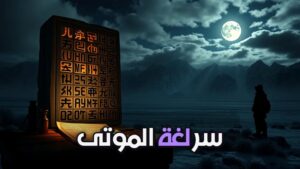
The Romans were not content with merely militarily defeating the Etruscans; they undertook a comprehensive cultural cleansing. They adopted the Etruscan “toga” as a symbol of Romanness, appropriated the “fasces” or bundle of rods symbolizing authority, and even the arch architecture that characterized Rome was originally an Etruscan innovation. You now feel the magnitude of this historical injustice, do you not? To lay the foundations of the ancient world, only for another to claim authorship of the edifice. Yet, the greatest enigma lies in those texts that refuse to yield their secrets. There is a peculiar linen manuscript known as the “Liber Linteus Zagrabiensis” (Zagreb Linen Book), originally used for mummification in late Egyptian periods. When scholars examined this scroll, they discovered it contained the longest known Etruscan text in the world, comprising approximately twelve hundred words. Imagine the irony: the language of an ancient Italian people preserved within the wrappings of a mummy in Egypt. You attempt to read these words, finding names of gods and sacrificial rituals, but the full meaning remains elusive. It is a code that grants you little and conceals much. This echoes other great ancient mysteries that guard their secrets fiercely. The use of the linen for mummification is a fascinating twist of fate for this linguistic treasure.
Spirituality, Equality, and Lost Histories
Why does this people insist on remaining silent? Perhaps because they believed that everything in this universe was predetermined and linked to the will of the gods. You now perceive their profound interest in divination, as Etruscan priests would read the future in animal livers or the paths of lightning across the sky. The Romans themselves, despite their pride, would summon Etruscan seers to interpret omens and strange occurrences for them. In this people, you discern a deep spirituality that transcended the material, a civilization that viewed death merely as a gateway to another life filled with music, dance, and banquets. Their tombs are not places of sorrow but chambers adorned with joyful frescoes, depicting men and women reclining together on couches in a social equality that astonished the Greeks and Romans. In those eras, the status of Etruscan women terrified men in Rome and Athens. You discover that women here possessed their own names, received education, attended athletic games, and sat with their husbands in public forums. This social advancement was centuries ahead of its time, and perhaps this was one reason the Romans sought to obliterate this culture. They could not tolerate seeing a society that valued freedom and beauty in such a manner. But where did those books go? It is said that the Roman Emperor Claudius authored a monumental history of the Etruscans in twenty volumes and compiled dictionaries of their language, but these volumes were lost or burned. You now realize that we are not just battling oblivion, but the loss of material evidence that would have enabled us to understand who we are.
The Pyrgi Tablets and Modern Hopes
Consider with me the “Pyrgi Gold Tablets,” discovered in the mid-20th century. Three tablets of pure gold, two in Etruscan and one in Phoenician. Scholars at that moment believed they had found the Etruscan “Rosetta Stone,” and that the linguistic puzzle was solved. But disappointment was bitter, for the Phoenician text was not a literal translation of the Etruscan, but rather a general summary. You glimpse the gold gleaming under museum lights, yet it remains as silent as its owner. These tablets speak of the dedication of a temple and mention a king named “Thefarie Velianas,” but the grammatical rules remain an intriguing enigma. It is a unique language, with no sisters or relatives in the global language tree. You now wonder, can modern science achieve what historians could not? In recent years, scientists have begun using DNA analysis on remains found in Etruscan tombs. The results have…
Frequently Asked Questions
Generated by AI Content Architect
About The Author