Was the Curse of the Pharaohs an Ancient Biological Weapon? Unraveling Tomb’s Microbial Mystery

0
image_1-14


Was the Curse of the Pharaohs an Ancient Biological Weapon? Unraveling Tomb’s Microbial Mystery
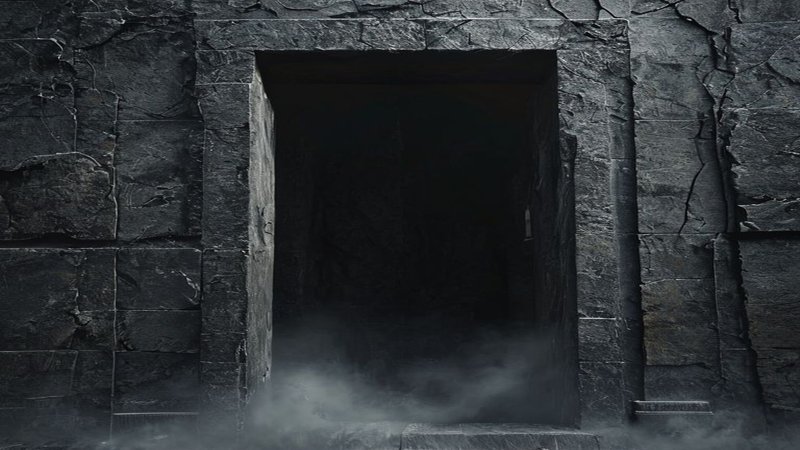
Imagine opening a door sealed for three millennia, only to find yourself confronted by an unseen death, patiently awaiting you in the darkness. This death is not a mechanical trap of arrows or falling stones, but a microscopic entity engineered to remain viable and lethal even after thousands of years. Have you ever wondered why the initial discoverers of pharaonic tombs died mysteriously, one after another, despite being in good health prior to their entry? What we today call the “curse of the pharaohs” might not be a magical spell, but rather the earliest recorded instance in history of strategic biological warfare, hidden deep within the earth.


Tombs as Biological Time Capsules

When you stand before the sealed gate of a royal tomb, you are not merely facing a magnificent cultural legacy; you are confronting a meticulously sealed biological laboratory. The ancient Egyptians, proficient in medicine, anatomy, and mummification, were not ignorant of the nature of diseases. On the contrary, they fully understood that diseased bodies could become biological time bombs. Consider the body of King Ramesses V, whose detailed mummy examination revealed clear scars of the deadly smallpox. This king, who passed away over 3,200 years ago, carried a strain of the virus, which in his era claimed thousands of lives, into his tomb. Was placing a king afflicted with an infectious disease in a hermetically sealed chamber merely a funerary ritual, or was it a biological warning to anyone daring to desecrate the sanctity of the tomb?

You must recognize that the environment within royal tombs is unique and carefully designed to preserve organic matter. Low humidity, absolute darkness, and complete isolation from external air transformed these tombs into ideal incubators for fungal spores and bacteria. Scientists have discovered a lethal fungus, Aspergillus flavus, inside sealed sarcophagi. This fungus produces mycotoxins capable of causing severe respiratory hemorrhage and sudden organ failure in humans. When Lord Carnarvon and his companions inhaled tomb dust in 1922, they were unaware that their lungs had become a battleground for viruses and fungi that had lain dormant for millennia.
Tombs as Biological Time Capsules


Ancient Knowledge of Disease and Intentional Warfare

The use of biological agents as a weapon was not accidental but stemmed from an ancient Egyptian philosophy that viewed the body as a vessel for both vital and pathogenic forces. The ancient medical prowess of Egyptians is well-documented. You can observe that some funerary texts warn intruders of diseases that will consume their bodies as worms consume the earth. These were not merely moral threats but were based on knowledge of the properties of decaying organic matter. In the mummification process, the pharaohs used chemicals, aromatic oils, and salts such as natron—substances that prevent rapid decomposition but simultaneously create a chemical environment that preserves specific dormant pathogens for extended periods. These pathogens awaken upon the introduction of humid air and a warm human body into the chamber.

Consider the famous historical account of the plague that struck the Hittites following their conflict with Egypt. Sources indicate that Hittite soldiers contracted a mysterious epidemic after contact with Egyptian prisoners or seizing contaminated spoils. This incident opens the door to a terrifying hypothesis: that the pharaohs understood the potential for deliberately transmitting diseases to weaken enemies. The idea of concealing diseases in tombs might be an extension of this military thought. For the ancient Egyptian, the tomb was a fortress for the future, and if walls and doors failed to protect, microscopic death would assume the task.


Modern Science Uncovers Dormant Threats

You now live in an era that fears global pandemics, but imagine the terror of 19th-century excavators encountering diseases they believed had become extinct. Modern analyses of samples from tomb walls have revealed the presence of Staphylococcus and Streptococcus bacteria that have remained viable in a state of dormancy. These microorganisms are not mere relics; they are lethal defensive tools. Researchers have found that some tombs contained large quantities of bat droppings harboring complex respiratory viruses. Small openings designed for the passage of the soul allowed these creatures entry, which over time transformed into living reservoirs of epidemics.

The scientific evaluation of the ancient Egyptian biological weapon hypothesis goes beyond mere coincidence. The Egyptians possessed precise knowledge of toxins extracted from plants and animals, and they incorporated them into materials used for wall paints or shroud anointing. Consider the arsenic, copper, and chemicals that make touching the walls or inhaling their dust a slow, suicidal process. You are not facing merely a tomb; you are facing a biological and chemical landmine, timed to detonate after thousands of years.
Modern Science Uncovers Dormant Threats


Architectural Design and the Unseen Enemy

Could the pharaohs have anticipated modern science in understanding germ theory? Evidence suggests they observed that certain areas or objects could cause illness without direct contact. Thus, the design of tombs with narrow chambers and winding passages was not solely to disorient thieves but to ensure the concentration of contaminated air at specific points. When you enter these passages, you move through an air tunnel laden with carefully preserved particles of death.

What we today perceive as scientific achievements in virology was practiced by priests and physicians in ancient Egypt as a form of science-protected magic. They recognized that death was not an end but a transition, and protecting this transition required the strongest weapons—weapons that would not rust or weaken with time, weapons that would attack the victim from within. The true horror lies not in seeing the mummy, but in the air surrounding it, air that carries genetic codes of ancient diseases against which your modern body possesses no immunity.


Frequently Asked Questions

What is the ‘Curse of the Pharaohs’ hypothesis discussed in the text?
The text proposes that the ‘Curse of the Pharaohs’ was not a magical spell, but rather the earliest recorded instance of strategic biological warfare, with ancient Egyptian tombs designed to release dormant pathogens and toxins upon intruders.
What scientific evidence supports the idea of biological agents being present in ancient Egyptian tombs?
Modern analyses have revealed the presence of lethal fungi like Aspergillus flavus, as well as bacteria such as Staphylococcus and Streptococcus, viable for millennia. Additionally, mummies like King Ramesses V show evidence of diseases like smallpox, and tombs contained bat droppings harboring respiratory viruses and chemical toxins like arsenic and copper.
Did the ancient Egyptians possess knowledge of disease transmission?
The text suggests that ancient Egyptians, proficient in medicine and mummification, understood the nature of diseases and observed that certain objects or areas could cause illness without direct contact. Their practices, like placing diseased bodies in sealed tombs and using specific chemicals, imply an awareness of how to contain or even weaponize pathogens.
How might the design of royal tombs contribute to this biological weapon hypothesis?
Royal tombs were meticulously sealed, with unique environments (low humidity, darkness, isolation) ideal for preserving organic matter and dormant pathogens. The design with narrow chambers and winding passages is theorized to not only disorient thieves but also to concentrate contaminated air, creating ‘air tunnels laden with carefully preserved particles of death’.

Generated by AI Content Architect

About The Author

Leave a Reply

Your email address will not be published. Required fields are marked *