Immortality Unleashed: The Science, Ethics, and Future of Eradicating Death

0
image_10-118


Immortality Unleashed: The Science, Ethics, and Future of Eradicating Death

Are you ready to live forever? Imagine your body ceasing to age while the hands of the clock turn around you in vain. Death, which we perceive as an inevitable end, may soon become merely a technical glitch that can be rectified in laboratories.


Aging: From Inevitable Fate to Treatable Disease
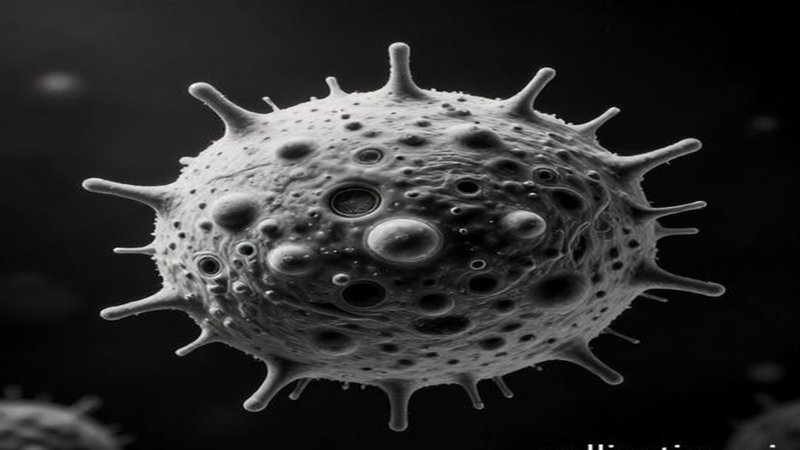
You look in the mirror every morning. You notice a white strand in your hair or a fine wrinkle around your eye. This is time imprinting its mark on your body. But what if I told you that modern science has begun to view aging as a disease, not as an immutable fate? We are living in a pivotal historical moment. Humanity is no longer content with merely treating age-related diseases; it is now attempting to eradicate aging itself. In the laboratories of Harvard and the Massachusetts Institute of Technology, scientists are intently studying microscopic cells. They are not searching for a cure for headaches or diabetes; they are seeking the key to reprogramming the human cell.

Aging: From Inevitable Fate to Treatable Disease


The Cellular Secrets of Immortality

Consider your body as an incredibly complex machine. This machine is composed of approximately thirty-seven trillion cells. Every second, millions of cells divide to replace damaged ones. However, this process is not flawless. Each time a cell divides, it loses a tiny fraction of its information. Imagine photocopying a document, then taking that copy and photocopying it again. Over time, the image becomes faded and indistinct. This is precisely what transpires deep within you. The protective caps on your DNA, which we call telomeres, shorten with each division. When these caps reach a certain limit, the cell ceases to function. It enters a state known as cellular senescence. The cell becomes like a zombie; it neither dies nor performs its function. Instead, it begins to secrete inflammatory substances that affect neighboring cells. This is the fuel that ignites the fire of aging throughout your entire body.


Breakthroughs in Anti-Aging Science: Senolytics and Genetic Reprogramming

Scientists have now experimented with astonishing techniques on mice in laboratories. They injected them with substances called senolytics. These substances act like a professional cleaning crew: they enter the body, identify senescent cells, destroy them, and leave healthy cells untouched. The results were astonishing by all measures. Mice suffering from hair loss, poor eyesight, and frailty regained their vitality. Their dense black fur grew back, and their muscle strength increased by fifty percent. These mice lived thirty-five percent longer than their peers. If we apply this proportion to the current human lifespan, we could easily reach 120 or 150 years. You are now wondering if this is actually possible in humans. The answer is that clinical trials have already commenced. There is a well-known drug called Metformin, commonly used to treat diabetes. Doctors have observed that individuals taking it live longer than healthy individuals who do not. They are less susceptible to cancer and heart disease. We are now witnessing the first official trial in history aimed at testing a drug for life extension, rather than for the treatment of a specific disease.

But the matter does not stop at pharmaceuticals. There is another revolution called genetic reprogramming. Do you recall Dolly the sheep? She was the beginning. Now, scientists have managed to convert adult skin cells into embryonic stem cells. They erase the cell’s memory and reset it to zero. Imagine if we could do that inside your living body. We could rejuvenate your heart, your liver, or even your skin. These are not mere daydreams. Billions of dollars are flowing from Silicon Valley magnates into this research. These individuals, who possess everything, do not wish to lose their most precious commodity: time. They want to buy additional years of existence. This pursuit has parallels to discussions about extending existence through non-biological means, such as Uploading Consciousness: The Terrifying Future of Digital Memory and Identity.
Breakthroughs in Anti-Aging Science: Senolytics and Genetic Reprogramming


The Human Paradox: Why Do We Seek Immortality?

Here we delve deeper into our analysis. Why do we pursue immortality? The fear of oblivion is the greatest driver of human history. We build pyramids, write books, and establish empires to leave an indelible mark. But today, science offers us the persistence of the body itself, not just a legacy. This pursuit reflects a profound human narcissism. We reject the natural laws that have governed existence for billions of years. Every living organism is born, grows, and then makes way for a new generation. This is the cycle of life. But humanity now wishes to break this cycle; it desires to remain at the apex indefinitely. This ambition inherently carries an existential risk. If people do not die, how will the planet accommodate more? The question of resource scarcity and sustainability becomes paramount, echoing concerns like those in Water Wars: Why ‘Blue Gold’ is More Valuable Than Oil & Reshaping the World.


The Dark Side of Forever: Societal and Ethical Dilemmas

Imagine a world where people live for hundreds of years. This world would face crises beyond anyone’s imagination. Let’s begin with the social aspect. If death ceases, the dynamic flow of generations will halt. In our current world, young people gain experience and replace the elders who retire and then pass away. This allows for the renewal of ideas and the evolution of cultures. In a world of immortals, the same individuals would remain in positions of power for two or three centuries. Obsolete ideas would die out with extreme difficulty. Cultural evolution would stagnate. Creativity, often born from the sense of limited time, would dissipate. When you know you have five hundred years ahead of you, why would you rush to complete your work today? It is death that imparts value and meaning to life. It is what drives us to love, work, and create because we know time is finite.

Then comes the most terrifying ethical issue: social justice. Life extension technologies will initially be astronomically expensive. Only the ultra-wealthy elite would be able to afford them. Here, we would face a schism within the human species itself. The distinction between rich and poor would no longer be about the type of car or the size of a home; the difference would lie in genetics and the number of years lived. We would witness a class of immortal rich, possessing health, youth, and wisdom accumulated over centuries. In contrast, we would see the rest of humanity dying at eighty or ninety. This level of inequality could lead to wars and conflicts unpredicted. It suggests a future divided by biological longevity, creating a profound chasm in human experience.

The Dark Side of Forever: Societal and Ethical Dilemmas


Frequently Asked Questions

How do modern scientists view aging?
Modern science is increasingly viewing aging not as an immutable fate, but as a disease that can potentially be treated and eradicated. Research focuses on understanding and reprogramming human cells to halt or reverse the aging process.
What role do telomeres and cellular senescence play in aging?
Telomeres are protective caps on our DNA that shorten with each cell division. When they reach a critical length, cells enter a state called cellular senescence. These ‘zombie cells’ cease to function and secrete inflammatory substances, contributing to the overall aging process and age-related diseases.
What are senolytics, and what have experiments shown?
Senolytics are substances designed to identify and destroy senescent (zombie) cells while leaving healthy cells untouched. Experiments on mice have shown astonishing results, including reversal of hair loss and poor eyesight, increased muscle strength by fifty percent, and a thirty-five percent increase in lifespan. Clinical trials are now beginning in humans with drugs like Metformin.
Beyond pharmaceuticals, what other technologies are being explored for life extension?
Genetic reprogramming is another revolutionary area, where scientists can convert adult skin cells into embryonic stem cells, effectively ‘resetting’ a cell’s age. The goal is to apply this internally to rejuvenate organs and tissues within a living body.
What are the primary societal and ethical concerns regarding human immortality?
The pursuit of immortality raises several significant concerns:

  • Overpopulation: If people stop dying, how will the planet accommodate growth?
  • Cultural Stagnation: The lack of generational turnover could halt the renewal of ideas and cultural evolution, as long-living individuals retain power.
  • Loss of Meaning: The finite nature of life often provides motivation for creativity and love; immortality could diminish this drive.
  • Social Inequality: Life extension technologies would likely be astronomically expensive initially, creating a profound division between an ‘immortal rich’ elite and the rest of humanity.

Generated by AI Content Architect

About The Author

Leave a Reply

Your email address will not be published. Required fields are marked *