Secret History of Hashish Production: From Hindu Kush to Moroccan Craft

Secret History of Hashish Production: From Hindu Kush to Moroccan Craft
Navigate Content
Geographical Cradle: The Rarest Wild Origins
Before organized trade routes existed, the cannabis plant flourished in unique, isolated environments that fostered rare chemovars. The primary cradle for these ancient varieties was the towering reaches of the Himalayas, specifically the deep valleys spanning the Hindu Kush (Afghanistan, Pakistan, and Northern India). These regions, shielded from external influence, preserved the authenticity of the wild plants, allowing for the initial, perhaps accidental, discovery of the resinous substance over five millennia ago.
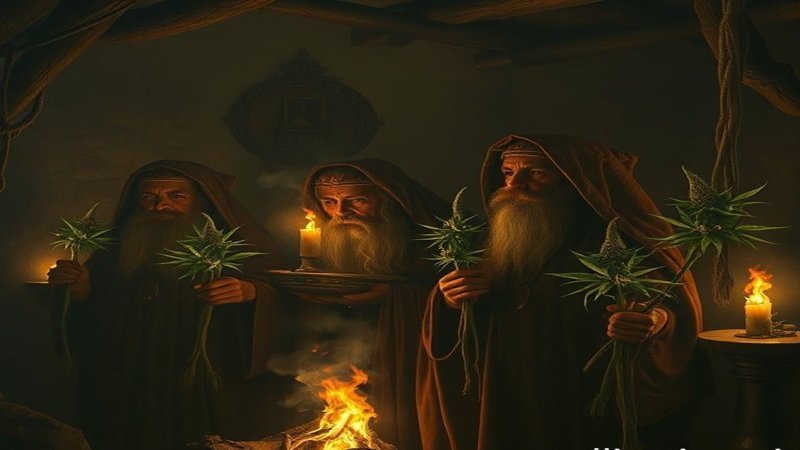
The Dawn of Extraction: Rudimentary Artistry
The earliest methods of handling this potent material were purely manual and deeply intuitive, often practiced by ancient shamans or local sages. The production was not initially industrialized but rather an inherited art:
- Manual Collection: Rubbing flowers by hand to collect the sticky resin.
- Resin Powder Collection: Shaking plants over cloths to gather the nascent powder.
This initial stage required a profound understanding of plant maturity, marking the first step in a journey of clandestine production that would travel along secret caravan routes.
The Rif Mountains: Sieving and Refinement Secrets
Knowledge migrated from the East, finding fertile ground in places like the Rif Mountains of Morocco, where production evolved into high art. The secrets guarded here focused heavily on separation and refinement:
- The process involved passing dried flowers through silk or mesh sieves with extremely fine apertures.
- The secret was in the rhythmic agitation and the number of sifting passes, determining different grades of purity.
Following sieving, the powder was compressed into hard blocks using primitive machinery, where the precise temperature and pressure remained a guarded family secret, dictating the final texture and flavor profile.
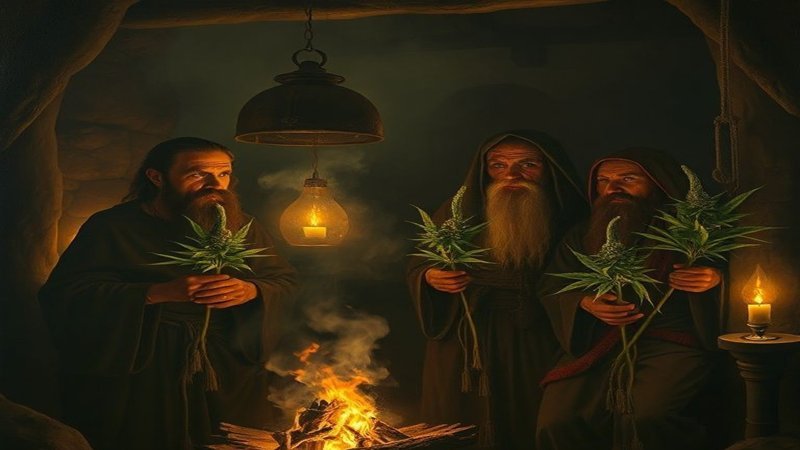
Afghanistan’s Hand-Rubbing Pinnacle (Mazar-i-Sharif)
In contrast to the sieving methods, Afghan traditions, particularly around Mazar-i-Sharif, often relied on meticulous cultivation and a technique known as ‘hand-rubbing.’ This method yielded hashish recognized for its soft, oily texture and potent flavor.
- Technique: Fresh plant material was vigorously rubbed by hand until the resin adhered to the palms.
- Extraction: The gummy resin was then carefully scraped off.
Mastery here depended on the dexterity of the artisan and the accuracy of the scrape, skills passed down orally through select artisans.
The Final Secret: Maturation and Aging
The historical craft extended beyond initial extraction and pressing; crucial secrets lay in the post-production phase. Aging, or maturation, was understood to profoundly impact the final product’s characteristics. While the text snippet cuts off here, historical records suggest various secretive methods involving controlled environments, specific wrappings, or burial techniques were employed to perfect the essence of the compressed blocks.
Frequently Asked Questions
About The Author